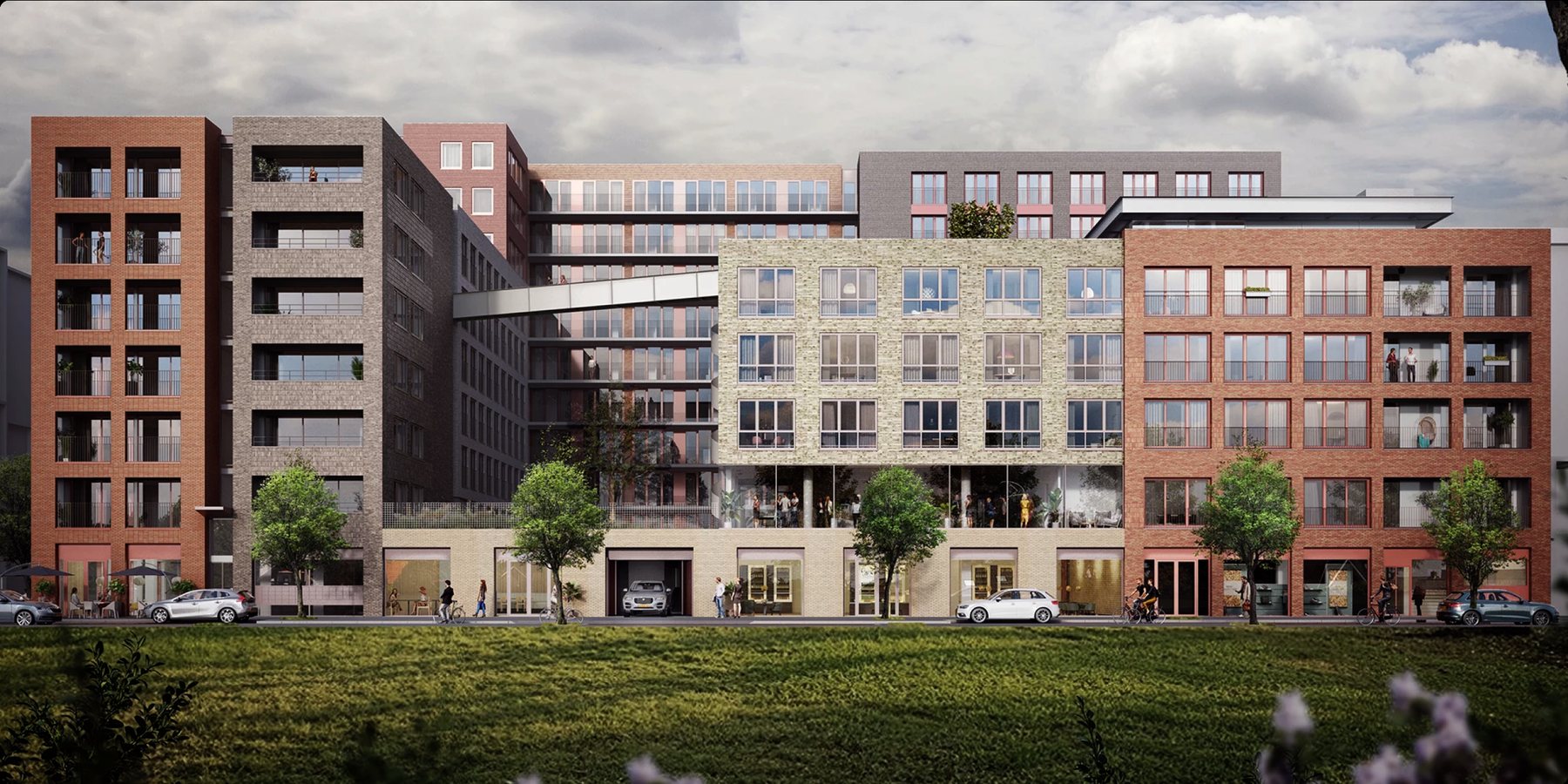
235 apartments.
One app. Live consumption.
At Domūs in Amsterdam Houthaven, utilities are settled on what each apartment actually uses. Residents used to find out at settlement. Rhino now reads the meters and feeds per-unit consumption into the Domūs app, built on AIRE, that residents already open for parcels and maintenance.

A variable bill,
and no way to watch it.
Domūs is a 235-unit student housing complex in Amsterdam Houthaven. Utilities are settled per apartment on actual consumption, periodically, rather than charged as a flat fee. That structure is fair, and it only works if the resident can see the number building.
Residents found out at settlement
Between settlements there was nothing to look at. A resident could not tell whether they were running high or low until the statement arrived, by which point the period was closed and the cost was already incurred.
Faults stayed invisible until they were expensive
A running tap or a failed appliance produces no complaint and no alarm. It produces consumption. With no per-unit visibility, the property team had no way to spot one until it showed up as an inflated invoice.
Whatever was added had to go in the existing app
Residents at Domūs already had one app for maintenance, bookings, parcels and building news. A separate energy portal would have been ignored. Any new data had to arrive in the app they already opened.
Read the meters.
Put them in the app.
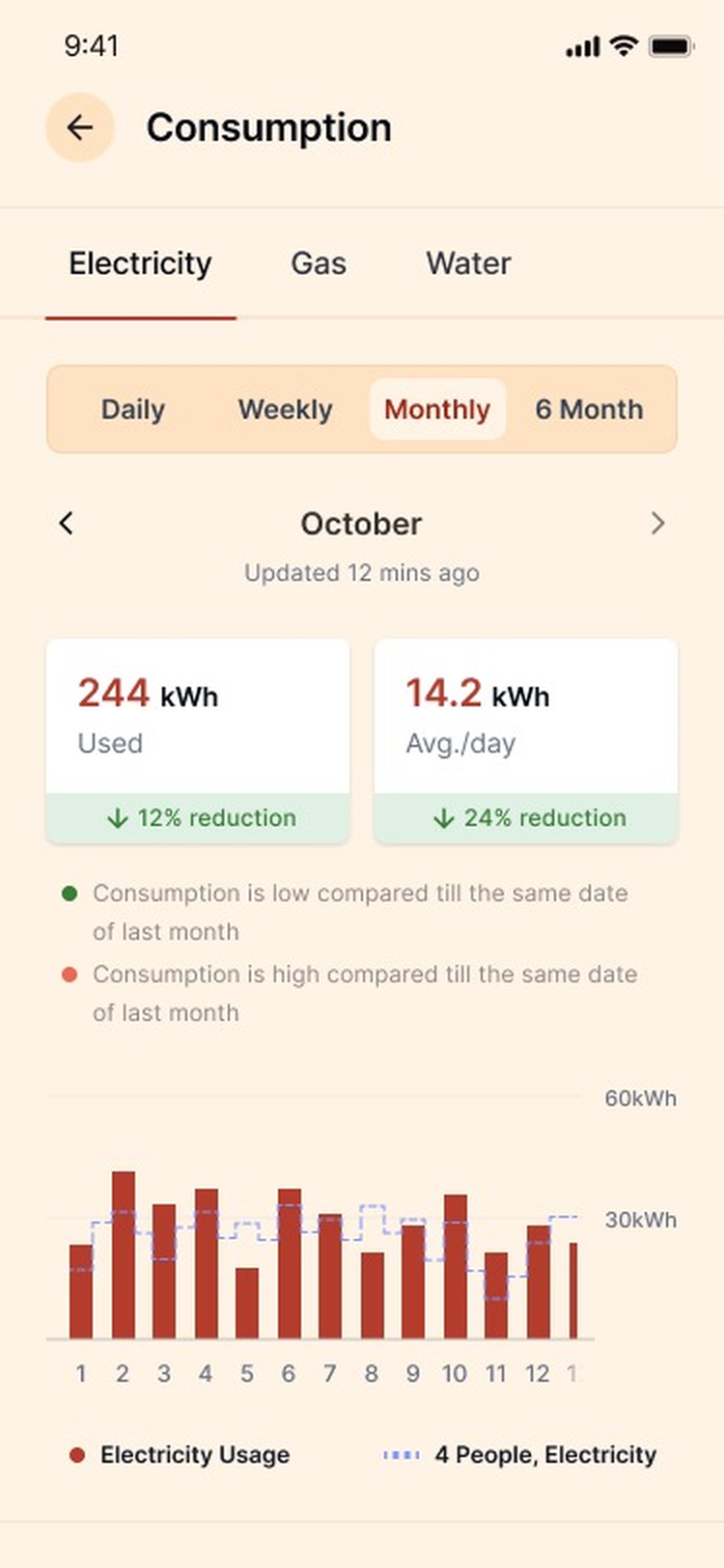
Rhino connects to the meters at Domūs and resolves consumption to the individual apartment. That data reaches residents through a single API into the Domūs app, built by AIRE, which is where they already handle everything else about living in the building.
Per-unit metering, continuously
Rhino reads the meters at Domūs and assigns each metering point to the apartment it serves. Consumption is collected continuously rather than at the end of a period, so there is a running figure for every unit at any moment somebody asks for one.
Consent inside the app
Before any consumption is shown, the app asks the resident for permission to read their data. They can decline, and they can withdraw it later. The consent sits in the same place as the data it governs, which is where a resident would think to look for it.
One API into the app they already use
The consumption view is a screen inside the Domūs app, next to maintenance and bookings. No second login, no separate portal, no adoption campaign. Residents check where they stand at any point in the period, by day, week, month or six months.
The bill stopped being
a surprise.
Nothing at Domūs was rebuilt to make this work. The meters were already there, and so was the app. What changed is that the two are now connected, and the number a resident is charged for is a number they have been able to watch all period.
Rhino reads the meters.
AIRE reaches the resident.
Domūs works because each side does the part it is built for, and neither tries to do the other's.
Rhino: clean, structured consumption
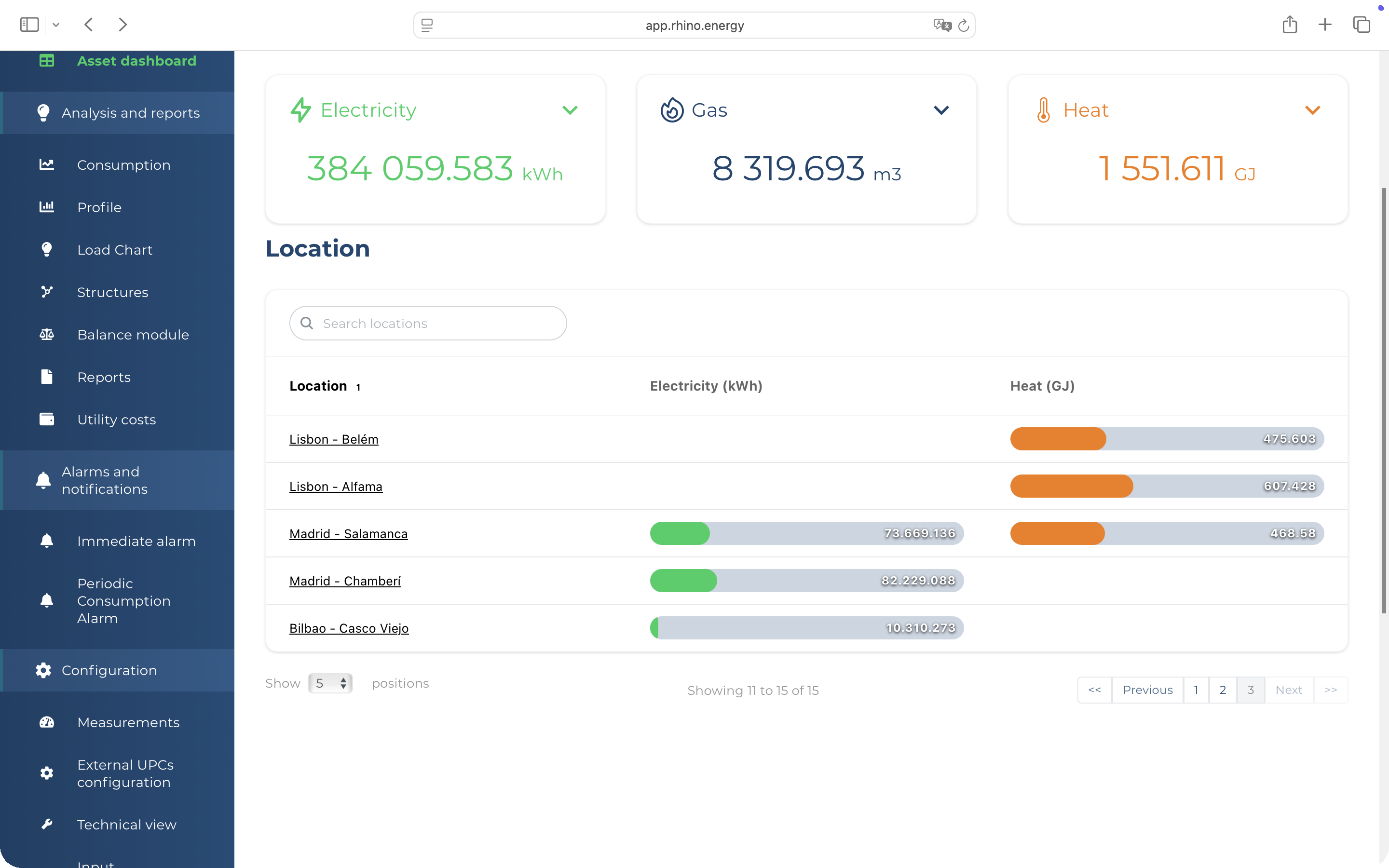
Rhino connects to the meters already installed at Domūs and delivers per-unit readings. No infrastructure overhaul, no manual reads, and no monthly export for somebody to reconcile.
AIRE: the app residents already open
AIRE runs the Domūs app that residents use for maintenance requests, bookings, parcels and building news. Rhino's data arrives in that app rather than in one of its own.
One integration, not a project
A single API connects the two. Once the meters are connected, the feed runs on its own. Adding consumption to the resident experience did not add a system for the property team to operate.
Your residents.
Their consumption.
See how Rhino connects the meters already in your student housing portfolio and puts per-unit consumption in the app your residents already use.