
Healthcare
Care never stops.
Neither does the meter.
A hospital, a clinic and a care home run every hour of the year, so the saving every other asset class starts with, switching things off out of hours, does not exist here. Comfort and hygiene minimums are clinical, not preferences. What is left is finding waste and faults, and that starts at the meter.

Why now
Healthcare buildings are among the most energy-intensive in any portfolio, and among the least instrumented. EPBD now sets minimum performance standards for the worst-performing non-residential stock, and healthcare sits inside it. Most of these assets are also owned by one party and run by another, which is exactly the split that keeps meter data out of the reporting.
24/7
operating hours, so there is no out-of-hours baseline to switch off
16%
worst-performing non-residential stock to be renovated by 2030 under EPBD, rising to 26% by 2033
60°C
minimum hot water storage temperature for legionella control, so the tank cannot simply be turned down
The problem
Every usual lever is off the table.
You cannot close the building at night, you cannot turn the hot water down, and the meter contract is usually held by the operator rather than the owner. What is left has to be found, not switched.
Facility Manager · Operations
There is no out-of-hours to save in.
An office empties at six and stays empty all weekend, which is where most of its savings come from. A ward, a kitchen and a nurse call system run at three in the morning on a Sunday. The load profile is close to flat, so the standard playbook of night setbacks and weekend schedules returns almost nothing, and the saving has to come from somewhere the schedule cannot reach.
Technical Manager · Compliance
You cannot save by turning the hot water down.
Legionella control puts a hard floor under storage and distribution temperatures, ventilation rates in treatment areas are regulated, and a care home cannot run cool because the heating bill is high. Every setpoint an office would trim is fixed here for a clinical reason. That leaves faults, leaks, plant running against itself and circuits nobody has looked at in years, and none of those are visible on a single monthly invoice.
ESG Lead · Asset Manager
The owner reports on data the operator holds.
Healthcare real estate runs on long leases and sale-and-leaseback, so the fund that owns the asset is rarely the organisation that signed the energy contract. CSRD, GRESB and EPBD still land on the owner. Asking a care operator for a spreadsheet once a year produces late, partial data nobody can audit. The fix is a data route that does not depend on anyone remembering.
How Rhino helps
Find what the schedule cannot reach.
Three problems. Three direct responses. All from the same readings.
Submeter the plant that actually drives the bill.
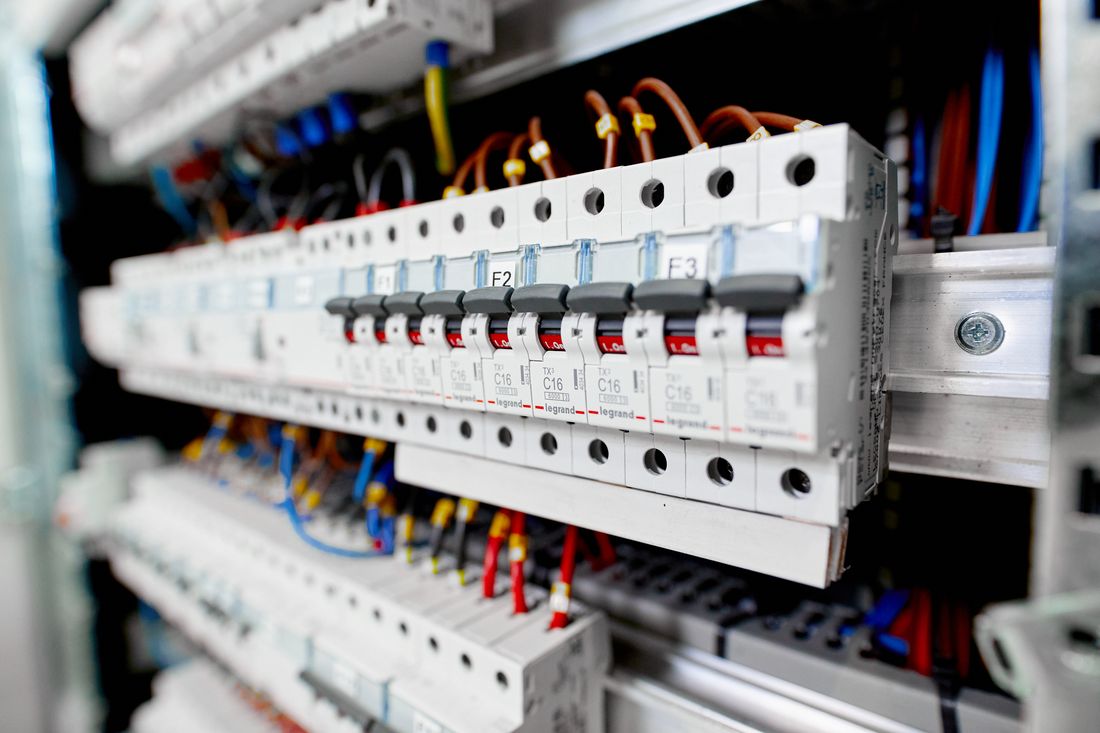
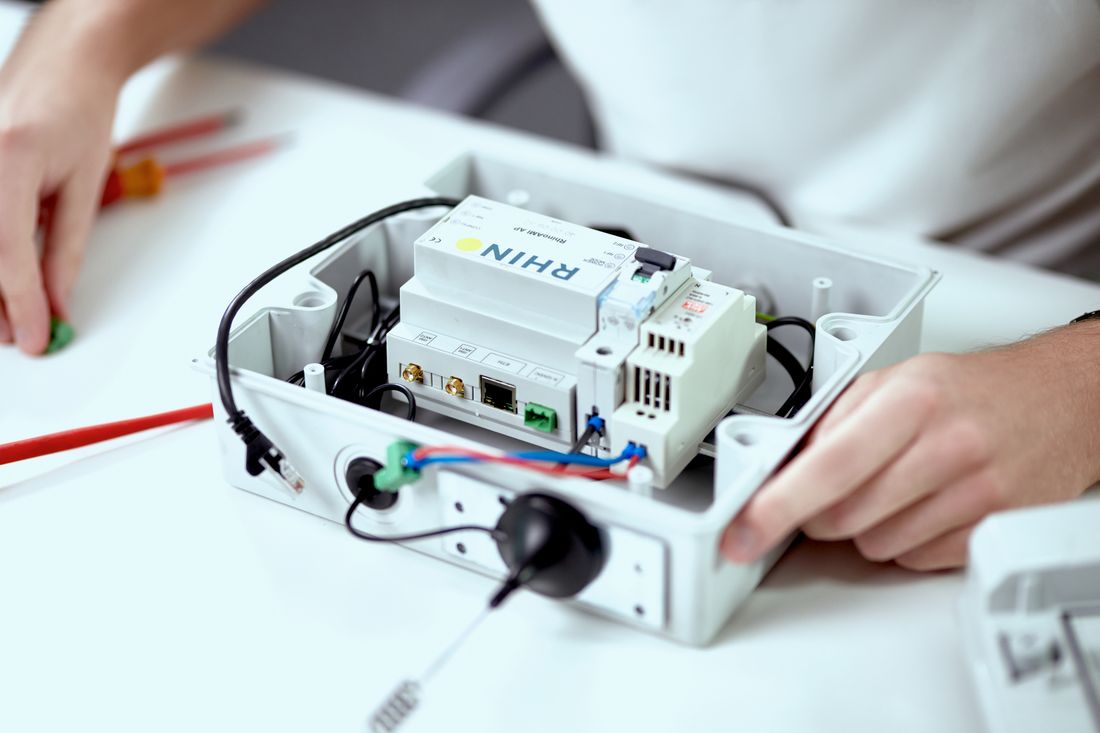
Kitchens, laundry, sterilisation, hot water generation and ventilation are where a healthcare building spends its energy, and they are usually behind one main meter. Rhino reads existing submeters over M-Bus and Modbus through its own Access Point, and adds meters on the existing wiring where a load has none. Electricity, gas, water and heat on the same feed.
See the hardwareAlarms do the work the setpoint is not allowed to do.
When you cannot turn anything down, faults are the whole saving. 15-minute interval data and threshold alarms surface a heating circuit fighting a cooling circuit, a hot water loop cycling all night, a stuck valve, and the flat overnight flow that means a leak. Each one is a service visit rather than a capital project.
See Portfolio OperationsOwner-grade reporting without touching the operator's contract.
Rhino connects to the utility network directly where the smartmeter route exists, so the owner gets continuous, auditable consumption without renegotiating the lease or waiting on an annual data request. The operator keeps their supply contract. The fund gets figures that trace back to a meter reading at a time.
See ESG & Compliance
Where it goes
Four loads carry most of the bill.
In a healthcare building the consumption concentrates in a small number of places. These are the circuits worth metering first, and the ones a single main meter hides completely.
01Domestic hot water
Bathing, handwashing and cleaning run all day, and the legionella floor keeps the whole loop hot around the clock. Circulation losses on a badly balanced loop are invisible without a heat meter on it, and they run every hour of the year.
02Kitchens and laundry
Catering and in-house laundry are concentrated gas, electricity and water loads on a predictable daily rhythm. Metered separately they are easy to benchmark between sites; inside the building total they are impossible to see at all.
03Ventilation and air handling
Air change rates in treatment and isolation areas are set by regulation, but the plant serving corridors, offices and storage often runs on the same schedule as the clinical zones because nobody has ever seen the two loads apart.
04Water, and what leaks from it
A healthcare site never drops to zero flow, which is exactly why leaks hide here longer than anywhere else. A baseline built from 15-minute data turns overnight flow from background noise into a number you can alarm on.
ESG integrations
Healthcare utility data, feeding compliance.
Healthcare funds already report through Deepki, Measurabl or Buildingminds. The bottleneck is getting consumption out of buildings the operator runs and into those platforms. Rhino is the data layer underneath: connected to the meters and the utility network, feeding actuals by API. No annual data request. No estimation.
Deepki is the real estate industry's leading ESG intelligence platform. Rhino is the data source beneath it. Consumption flows from Rhino's API into Deepki, so an owner reporting on an operator-run building works from actual readings rather than a figure someone typed in once a year.
Used by
 and more
and more
Also integrates with

Inside the platform
One platform. All utilities. Every circuit.
Electricity, gas, water, heat. Plant submeter up to portfolio total. Compare a kitchen against the same kitchen last winter, or one care home against thirty others, with consumption normalised per bed so sites of different sizes sit on the same axis. Alarms, cost allocation and audit-ready reports run on the same readings.
Tour the platform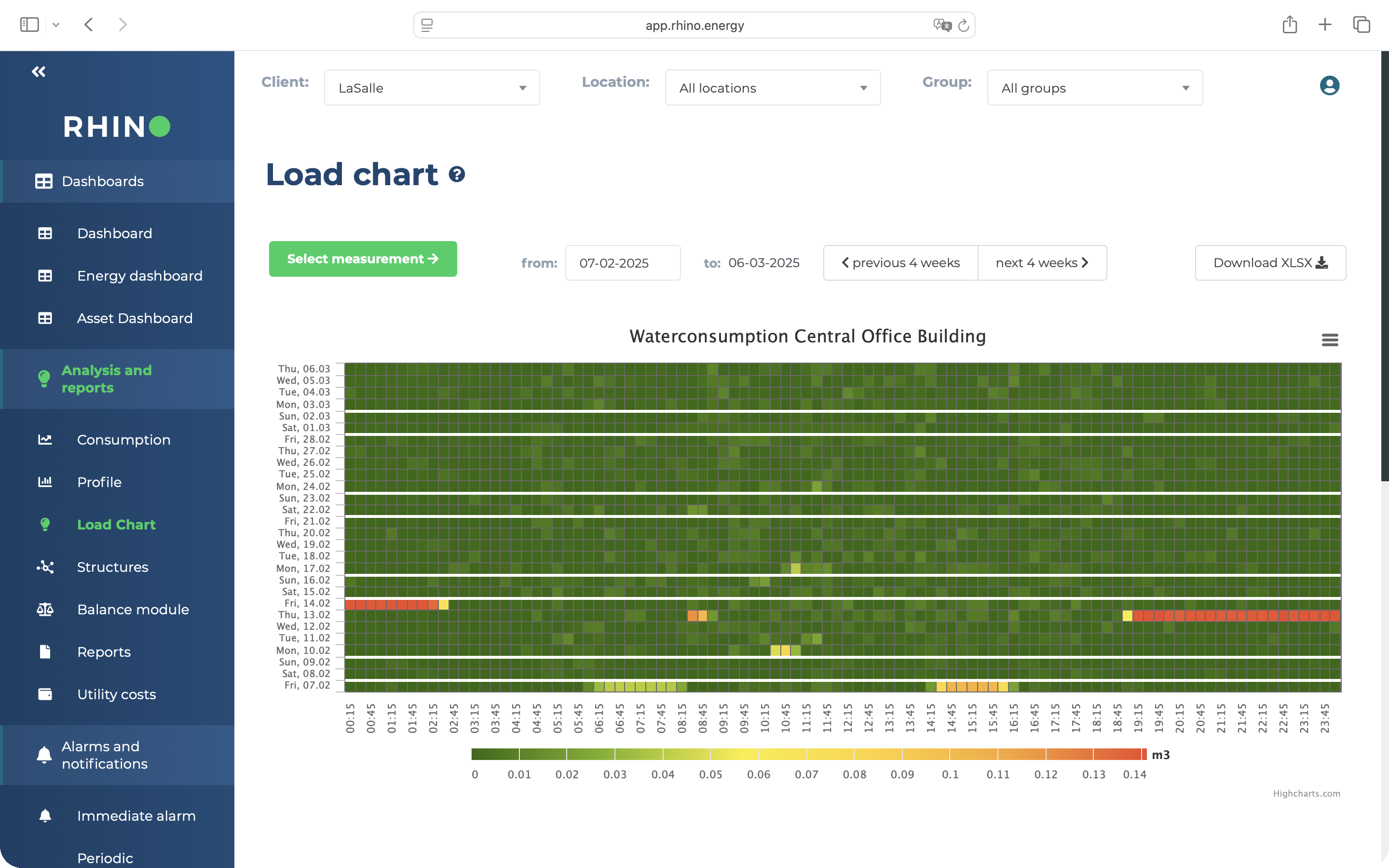
Customers
Care operators and the funds behind them.
Rhino works with care operators, healthcare landlords and the investors who hold the assets, across the same platform the rest of the portfolio runs on.
Common questions
Healthcare utility monitoring, answered.
By finding faults rather than trimming schedules. When the building never closes, the savings sit in plant running against itself, badly balanced hot water loops, ventilation serving non-clinical space on a clinical schedule, and leaks. All of those show up in 15-minute interval data at the circuit that causes them, and none of them show up on a monthly invoice.
No. Rhino measures, it does not control. Nothing Rhino installs can change a setpoint, a temperature or an air change rate. It reads meters and reports what it reads, which is precisely why it is useful in a setting where the setpoints are fixed for clinical reasons.
Usually yes, and without renegotiating the lease. Where a smartmeter route exists, Rhino connects to the utility network directly with a consent flow, so the operator keeps their supply contract and the owner still gets continuous readings. Where it does not, a Rhino Access Point on the building's own submeters gives the same result. Both produce figures an auditor can trace to a meter and a timestamp.
Yes. The work sits in plant rooms and distribution boards rather than in clinical or resident space, and it connects to the meters that are already there instead of replacing them. That keeps the installation short, keeps it out of occupied areas, and keeps CAPEX low, which matters when the building cannot be taken offline.
Healthcare buildings are non-residential stock under EPBD, so the minimum energy performance standards for the worst-performing buildings apply to them, and owners in scope of CSRD report their consumption like any other asset class. What differs is not the obligation but the difficulty: the numbers usually sit with an operator rather than the owner, which is the gap Rhino closes.
Start with one site
Your plant. Your meters. What it costs.
Send us one building and we will show you what Rhino reads in it, circuit by circuit, and what the same view looks like across the portfolio.
Further reading
From the Rhino blog.

