






Student Housing
Inclusive rent.
Uncapped energy bill.
In PBSA the room rate covers the utilities, so every kilowatt-hour a resident uses lands on your P&L, not theirs. Rhino meters consumption per room and per building, makes a fair-use policy something you can evidence, and feeds the same readings into billing and ESG reporting.
Why now
Student housing is the one residential asset class where the operator, not the resident, pays for the energy. Rents are set a year ahead and consumption is not. EPBD still counts these buildings as residential stock, GRESB still asks for actuals, and the fair-use clause in the tenancy is only worth what you can evidence at the meter.
100%
of the utility bill sits with the operator when the room rate is all-inclusive
16%
EPBD-mandated cut in average residential primary energy use by 2030, student stock included
12 months
liability window on every estimated utility service charge in European residential tenancies
The problem
You carry the bill you cannot see.
Inclusive rent moves the energy cost onto the operator. Annual turnover moves the meter readings out of reach. An empty summer building hides the waste that pays for itself to fix.
Operations Director · Asset Manager
A fair-use clause you cannot evidence is not a clause.
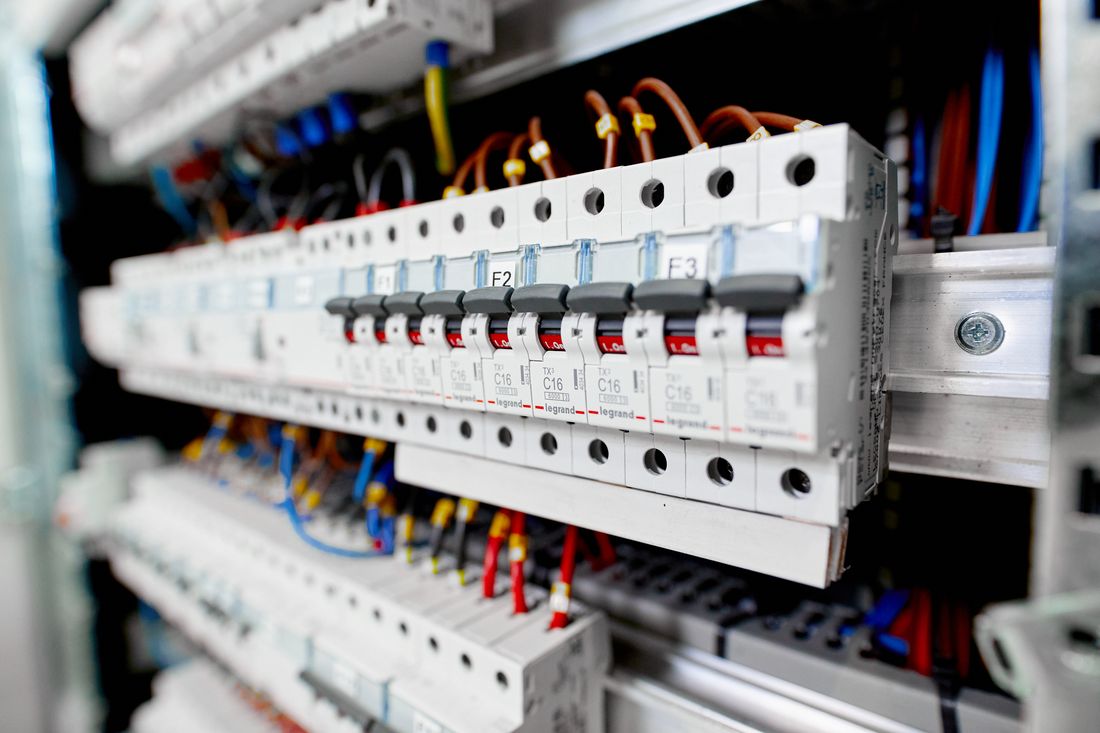
Most PBSA tenancies write a utility allowance into the contract and then settle on the building total, because nobody can produce a per-room figure. A handful of rooms drive the overrun and the cost is spread across everyone, including the residents who stayed well inside the limit. Rhino meters each room, so the allowance becomes a number both sides can read.
Operations Director · Facility Manager
The summer void is the cleanest audit you never run.
Between June and September a student building empties out. Consumption should fall with it. Where it does not, the gap is plant left running, a stuck valve, corridor heating on a winter schedule, or a leak nobody has walked past. Student housing gives you an annual controlled experiment that offices and hotels never get, and without interval data the result goes unread.
Operations Director · Finance
Every room changes tenant in the same week.
A student building turns over almost entirely once a year, and the check-out and check-in readings all fall due at once. Done by hand across hundreds of rooms it is a week of staff time and a season of disputed deposits. Rhino timestamps the reading for every room automatically, so the handover is a report rather than a clipboard round.
How Rhino helps
Per room, per period, per bed night.
Three problems. Three direct responses. All from the same readings.
Room-level submetering without rewiring the building.
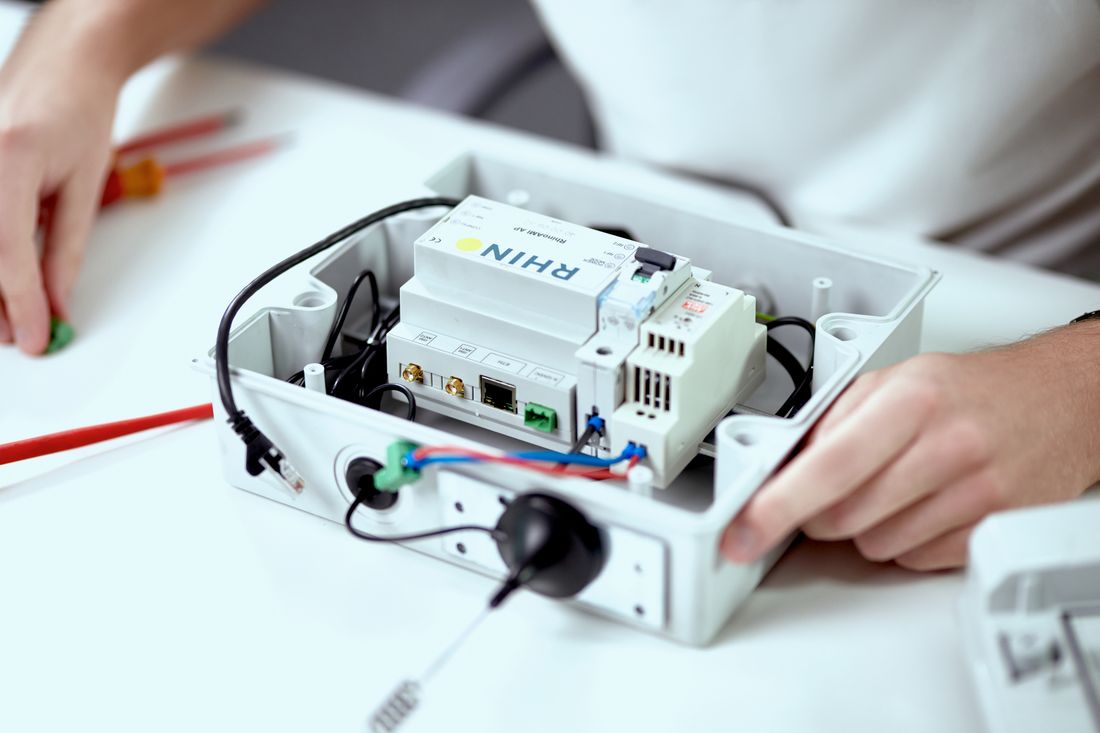
Rhino reads existing room submeters over M-Bus and Modbus through its own Access Point, and pulls whole-building supply from the utility network where the smartmeter route exists. Electricity, gas, water and heat on the same feed. Nothing gets ripped out and no resident has to let an engineer into their room.
See the hardwareConsumption in the app residents already open.
Rhino sends per-room consumption into the resident app you already run, with consent captured in that same app. Residents see what they are using while the period is still running, which is the only point at which they can do anything about it. At Domūs in Amsterdam that runs through AIRE.
See Tenant Billing & EngagementVoid-period baseload alarms on every building.
15-minute interval data and threshold alarms show you what an empty building still draws over the summer, and flag the overnight signature of a leak or a stuck valve during term. The waste you find in a void period is the cheapest saving in the portfolio, because fixing it costs a service visit.
See Portfolio Operations
Inside the platform
One platform. All utilities. Every room.
Electricity, gas, water, heat. Room submeter up to portfolio total. Rooms benchmark against each other inside a building, buildings benchmark against each other across the portfolio, and consumption normalizes per bed night so a 600-bed scheme and a 180-bed scheme can be compared without arithmetic. Alarms, billing exports and ESG-grade reports sit on the same readings.
Tour the platform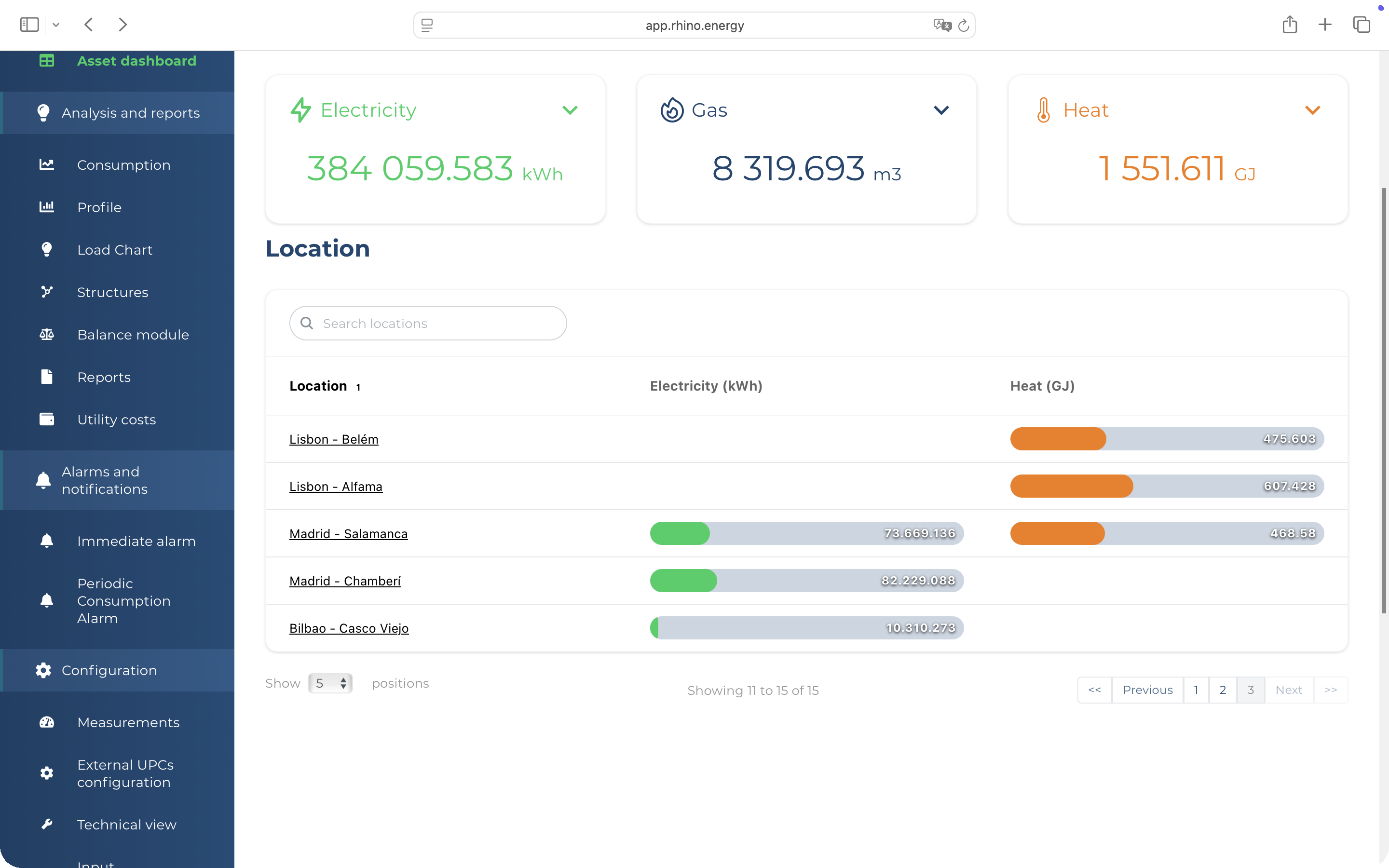
Client

Customer story · Student Housing
235 rooms. One app.
Live consumption.
At Domūs in Amsterdam Houthaven, utilities are settled per apartment on actual use. Rhino reads the meters and feeds consumption into the resident app built by AIRE, so residents track their cost during the period instead of finding out at settlement.
Per-unit metering, continuously. Every apartment read on its own meter, so the settlement is arithmetic on actuals rather than an apportionment argument.
Consent captured inside the app. Residents give consent in the same place they see their data, which is what keeps the flow GDPR-clean without a separate paper round.
One API into the app they already open. No second app to launch and no adoption campaign to run. The consumption tile sits next to maintenance and bookings.
235
Apartments metered individually
Live
Consumption visible during the period, not after it
API
Into the AIRE resident app, no second app

Domūs
Houthaven, Amsterdam
Customers
Student housing operators across Europe.
PBSA operators, student accommodation providers and the investors behind them use Rhino to meter their buildings room by room.
From our student housing deployments
What the data actually shows.
235
Apartments metered individually at Domūs Houthaven, settled on actual use
2,500
Metering points connected across the Greystar Netherlands portfolio
9%
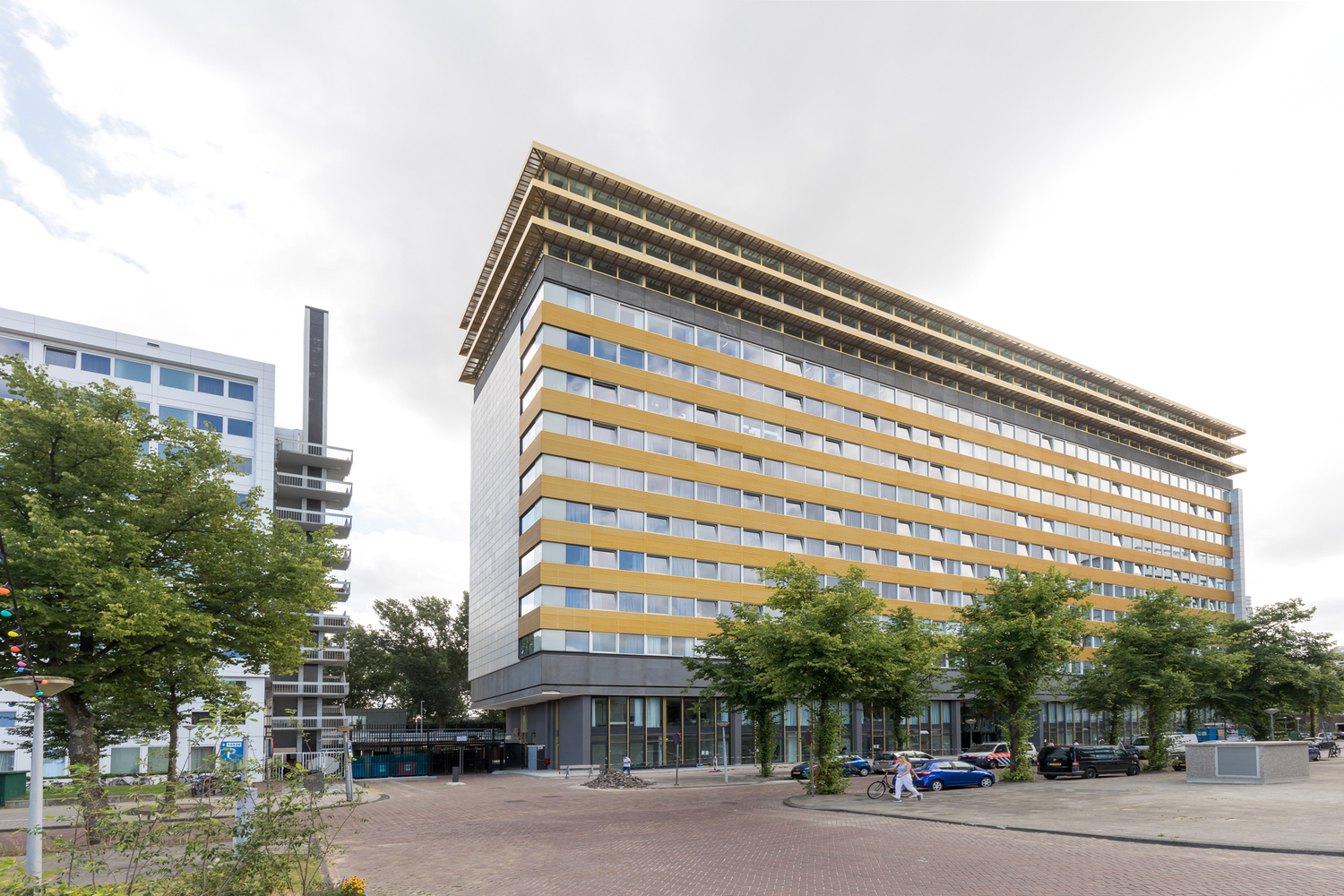
Less energy across 195 student apartments at Europahuis Amsterdam, Holland2Stay
Common questions
Student housing utility monitoring, answered.
Through the room submeters that are usually already in the building. Rhino reads them over M-Bus and Modbus using its own Access Point, then reconciles the total against the building supply so you can see what is metered and what is not. Where a room has no submeter, one can be added on the existing wiring without a refit.
That depends on your tenancy agreement and local law, which Rhino does not change. What Rhino gives you is the evidence the clause needs: a timestamped, per-room reading for the period, reconciled against the utility invoice, that both you and the resident can read. Most operators find the allowance works better as a visible number during the period than as a charge afterward.
In almost all cases, yes. Any Modbus or M-Bus meter can be read by the Rhino Access Point, whether or not that exact model has been configured before. Send us the make and model of what is installed and we will confirm what each one reads. A meter we have not configured yet is a meter we have not configured yet, not a dead end.
Start by reading what the building draws when nobody is in it. 15-minute interval data over a void period exposes plant left on a term-time schedule, corridor and stairwell heating, ventilation running at full rate, and water still flowing somewhere. Those are service-visit fixes rather than capex, and they repeat every year unless you find them once.
Yes. Rhino delivers per-room consumption over its API into the resident app you already run, with consent captured in that same app. At Domūs in Amsterdam this runs through AIRE, and residents see consumption per utility for a period they choose, next to maintenance and bookings.
See what your buildings actually use
Your rooms. Your meters. Your number.
Send us one building and we will show you what Rhino reads in it, room by room, and what the same view looks like across the portfolio.
Further reading
From the Rhino blog.

