 Featured
Top 5 ESG Trends in Real Estate in 2026
The year 2026 is poised to redefine ESG trends in real estate as commercial property owners and investors worldwide double down on sustainability. Environmental, Social, and Governance (ESG) factors have moved from niche considerations to central drivers of value and compliance in the real estate in
10 min readRead the article
BREEAM Credits and Utility Data, Part 1: Which Credits Metered Data Earns
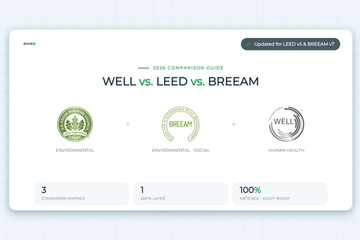
WELL vs. LEED vs. BREEAM: The Complete 2026 Comparison Guide
5 Benefits of Utility Submetering for Commercial Real Estate

AI-Powered Energy Management: Why It's Only as Good as Your Data
 ESG & Compliance
The EED Energy Audit Deadline: What Real Estate Portfolios Must Do Before 11 October 2026
Enterprises using more than 10 terajoules a year must complete an energy audit by 11 October 2026. The trigger is now energy consumption, not company size, and a portfolio of three or four mid-size offices clears the threshold.
9 min read Tips & Tricks
Can Your Meters Be Read Remotely? How to Check, Meter by Meter
Most meters already in your building can be read remotely, including old ones. The communication interface decides it, not the age or the brand. How to check a meter in four steps, which interfaces work, and when a site visit is still the honest answer.
7 min read Tips & Tricks
Why Tenants Dispute Their Utility Recharge, and the Data That Settles It
Recharge disputes come down to a number neither side can reproduce. The five things tenants actually challenge, what the EED requires by 1 January 2027, and the evidence pack that closes a dispute in one email.
7 min read ESG & Compliance
GRESB 2026 Updates: What CRE Portfolios Must Prepare For
The GRESB 2026 real estate standards are now in effect, and the bar has moved. Embodied carbon has shifted from data collection into active scoring, net-zero pathway commitments carry more weight, and tenant engagement data is under a brighter spotlight. For asset managers and sustainability teams m
6 min read Industry Insights
How Much Estimated Data Can You Use in GRESB? The 20% Rule Explained
GRESB lets you estimate missing energy data, but only up to 20% of the period you have actual data for. How the estimation rule works, and how to stay under the cap.
3 min read Tips & Tricks
Cutting Peak Demand Charges When the Grid Is Full: A Practical Guide
Grid congestion is turning peak power into your most pressured cost. How to find and cut peak demand charges with 15-minute interval data, without new hardware.
3 min read ESG & Compliance
Upcoming ESG Reporting Deadlines: Key Dates for 2026 and Beyond
8 min read ESG & Compliance
BREEAM Credits and Utility Data, Part 2: Energy Credits
Energy is the highest-weighted BREEAM category and where metered data does the most. The submetering, operational and reporting credits it earns, in In-Use V6 and New Construction V7.
5 min read ESG & Compliance
BREEAM Credits and Utility Data, Part 3: Water Credits
In BREEAM's water category, metered data earns monitoring and consumption credits and evidences leak detection, but not the fixture credits. Here is the line, for In-Use V6 and New Construction V7.
4 min read