


Hardware
Works with any meter.
No swap-out required.
Rhino hardware connects to the meters already in your building, reading data across all protocols, all utilities, all configurations. One access point per building. Complete data from day one.
250+ meter models
All utilities
Globally available
.png)
The system
One access point.
Unlimited meters.
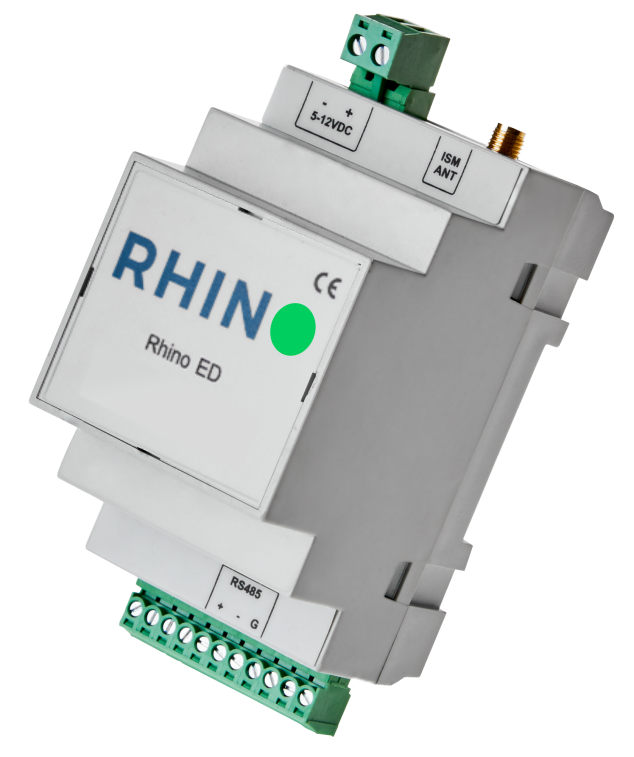
Three layers. One installation. The AP is the brain, the expansion devices are the readers, and Rhino Cloud is where everything lands.
Layer 1
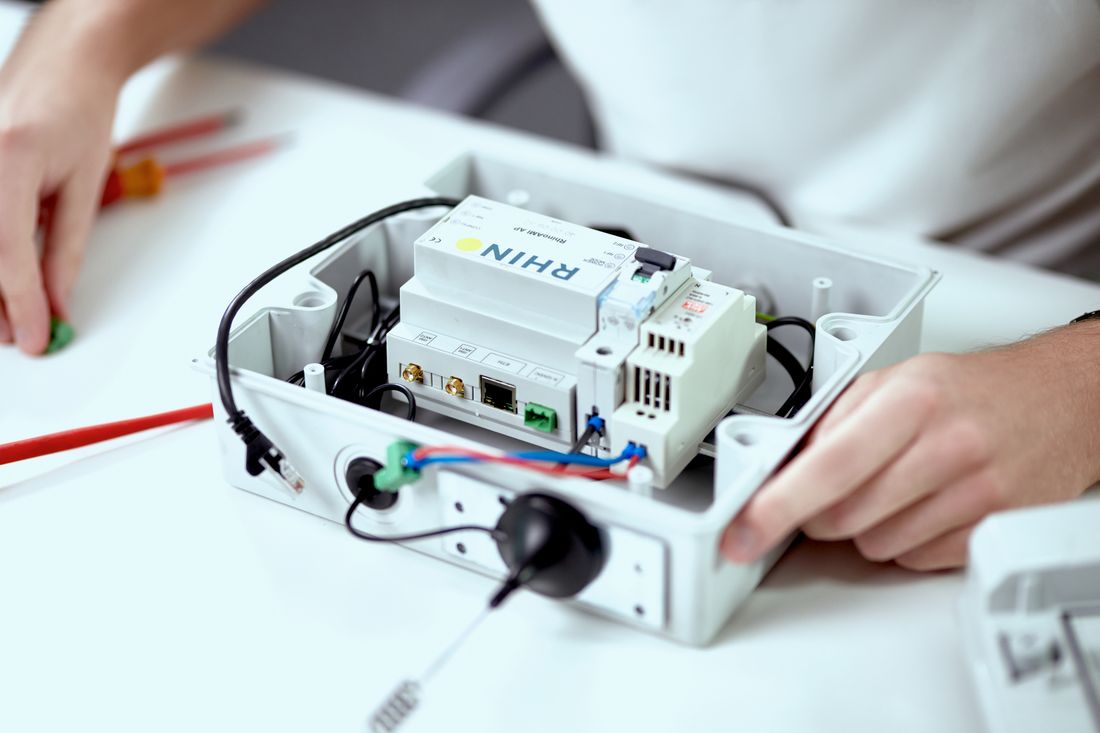
Access Point
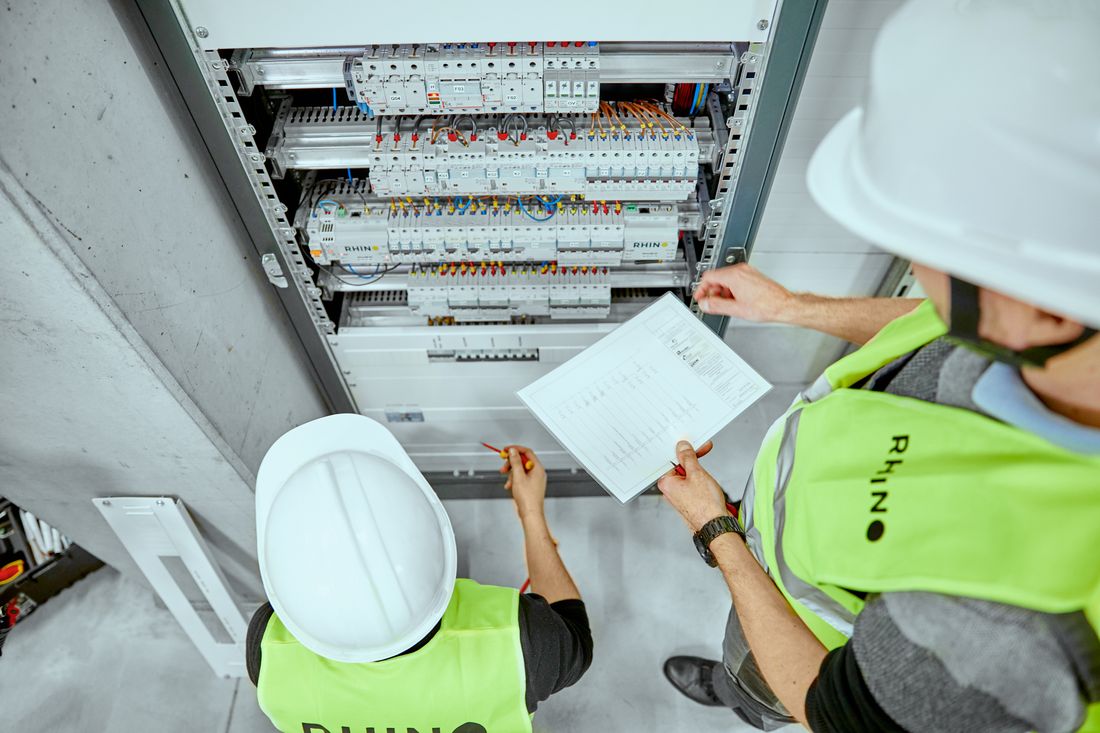
One AP per building, installed once. It connects to Rhino Cloud via Ethernet or GSM and receives data wirelessly from every expansion device on site.
Ethernet or GSM (LTE) · Internal battery backup · OTA managed
Layer 2
Expansion Devices
Compact wireless modules that clip onto or wire into each meter. They read the signal (pulse, Modbus, RS485, RS232, or wireless M-Bus) and transmit to the AP.
Battery options (5–7 yr) · Up to 50 devices per channel · RF range 300 m
Layer 3
Rhino Cloud
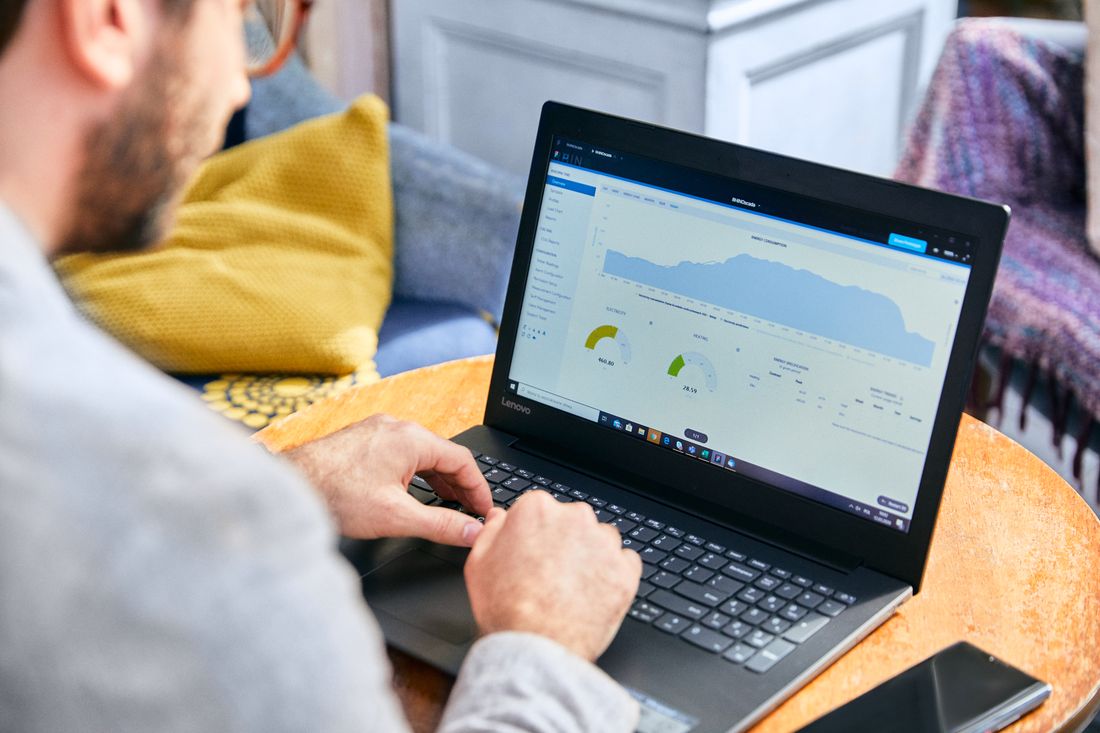
All meter data arrives in Rhino Cloud every 15 minutes. From there it flows to the dashboard, ESG reports, billing calculations, and the Utility Data API.
Real-time · 15-min intervals
Device range
Every meter.
Every protocol.
15 devices across four categories. Covering pulse, Modbus, RS485, RS232, wireless M-Bus, and environmental monitoring.
Access Points
The gateway
Rhino Access Point
One per building. The AP collects data from all field devices and sends it to Rhino Cloud. Available in three variants: Ethernet-only (AP-ETH), Ethernet plus GSM (AP-GSM EU, 433 MHz), and a US variant with LTE and 915 MHz RF.
Ethernet
GSM / LTE
Internal battery
OTA config
EU 433 MHz
US 915 MHz
Expansion Devices
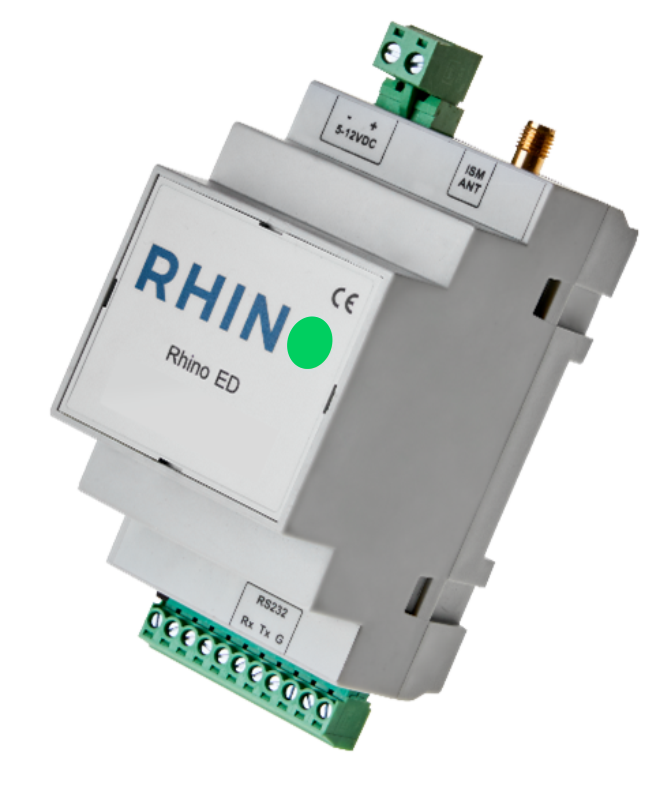
ED RS485
Reads Modbus RTU, GazModem I and II meters via RS485. Used for electricity submeters, heat meters, and gas meters with RS485 output.
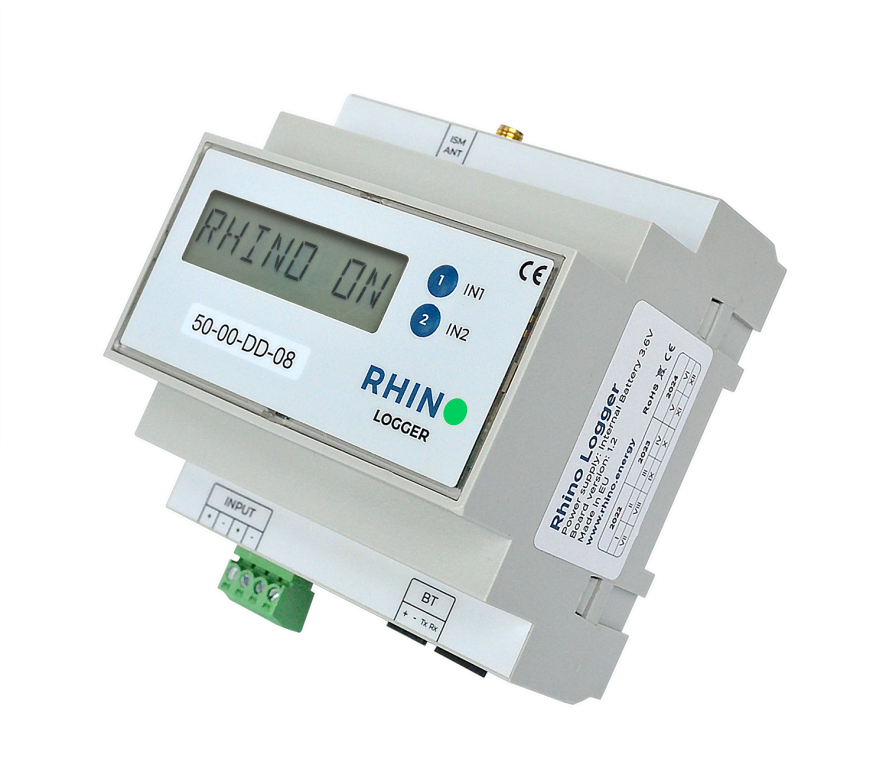
ED RS232
Reads meters with an optical IEC 62056-21 port via RS232. Works with most utility meters that have a standard optical interface.
ED DI
Reads pulse (S0) signals from electricity, gas, water, and heat meters. Battery powered. No wiring to the AP. The ED DI-D variant adds an alphanumeric display for hard-to-reach meters.
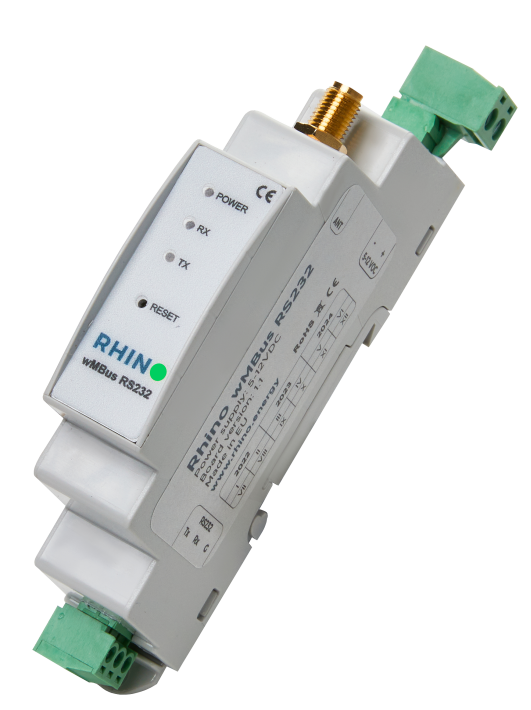
WMBus RS232
Receives wireless M-Bus (T1 and C1 mode) signals from wMBus-enabled meters and passes data through to the AP via RS232. Also includes the P1 RS232 adapter for Dutch smart meter ports.
Environmental Sensors
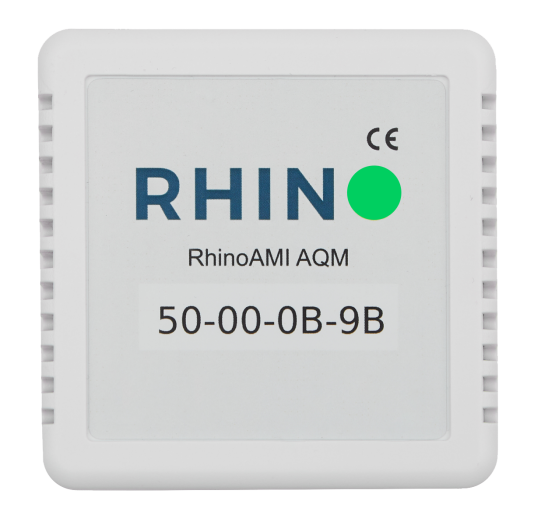
Sensor AQM
Air quality monitor measuring temperature, humidity, CO2 and VOC indicators, and particulate matter (PM1.0, PM2.5, PM10). For occupied spaces and comfort monitoring.
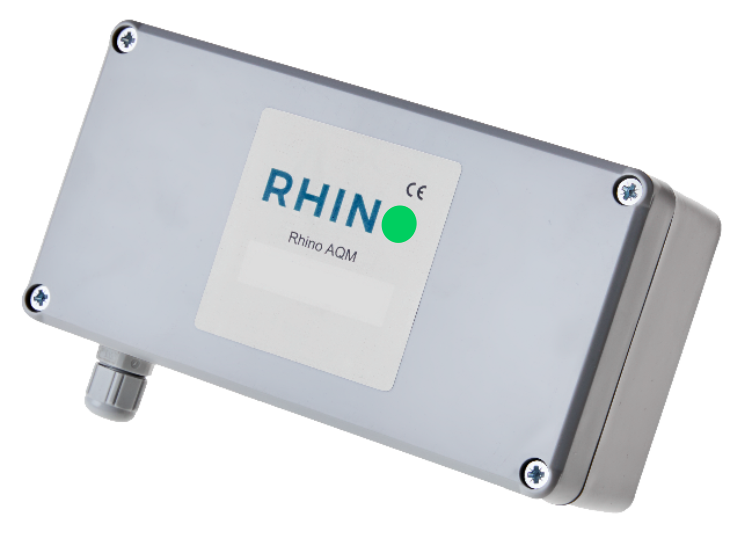
Sensor TH
Wireless temperature and humidity sensor. Battery powered, 3–4 year life. Suitable for utility rooms, corridors, and server spaces where basic climate monitoring is needed.
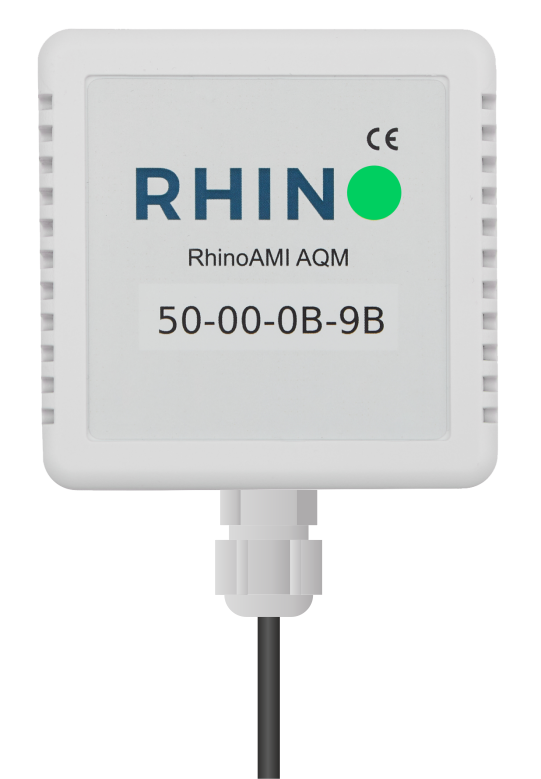
Sensor PT100
Probe temperature sensor for extreme range monitoring. Uses an external PT100 probe, covering from -30°C up to 400°C depending on the probe. Used for refrigerators, freezers, boilers, and stoves.
Meter compatibility
250+ meter models.
All utilities.
Electricity, gas, water, and heat, including submeters. Compatible with the brands already installed across most commercial real-estate portfolios globally.















250+
meter models
supported
supported
Supported protocols
Pulse S0
Modbus RTU
RS485
RS232
IEC 62056-21
Wireless M-Bus T1/C1
GazModem I/II
BACnet
Modbus TCP/IP
Global coverage
Active in over 40 countries.
One system.
Rhino hardware ships in two RF variants that together cover most of the world. Both run the same firmware, connect to the same cloud, and feed the same dashboard.
🌍
Global: 433 MHz
RF: 433 MHz (ISM band)
The standard RF frequency for Europe, Asia Pacific, Middle East, Africa, South America, and Australia. Covers the full Rhino device range: AP-ETH, AP-GSM EU, ED RS485, ED RS232, ED DI, ED DI-D, all sensors, WMBus RS232, WMBus Repeater, P1 RS232.
🌎
North America: 915 MHz
RF: 915 MHz (ISM band)
Required for the United States and Canada. Available devices: AP-GSM US, ED RS485 US, ED DI US. North American variants carry CE, FCC, ISED, and RoHS certifications. 433 MHz and 915 MHz devices cannot be mixed in one installation.
Certifications
Rhino hardware meets international safety and compliance standards for commercial deployment across Europe, North America, and beyond.

CE Marking
Conformité Européenne. Confirms compliance with EU health, safety, and environmental protection standards. Required for all devices sold in the European Economic Area.

FCC
Federal Communications Commission. Required for radio frequency devices sold in the United States. Confirms the device meets RF emission limits and does not cause harmful interference.

ISED
Innovation, Science and Economic Development Canada. RF device certification for the Canadian market, required alongside FCC for full North American deployment.
RoHS
RoHS
Restriction of Hazardous Substances. EU directive compliance limiting lead, mercury, cadmium, and other hazardous materials in electronic and electrical equipment.
Common questions
Rhino hardware, answered.
Rhino hardware supports over 250 meter models across all utilities: electricity, gas, water, and heat, including submeters. It reads pulse (S0), Modbus RTU, RS485, RS232 (IEC 62056-21), and wireless M-Bus (T1 and C1 mode) signals. Compatible brands include Schneider Electric, Siemens, Kamstrup, ABB, Socomec, Itron, Hager, Apator, and B Meters, among others.
Most submeters installed in commercial buildings were never designed to transmit data. They measure accurately, but the reading stays on a display panel. Rhino hardware changes that: a compact expansion device attaches to the meter's pulse or RS485 output and starts transmitting data wirelessly to the access point. No new meter required, no civil works. Your existing submeter becomes a live data source, updated every 15 minutes, visible in the Rhino dashboard alongside every other meter in your portfolio.
No. Rhino hardware connects to the meters already installed in your building. One access point is placed per building and communicates wirelessly with compact expansion devices at each meter. No rewiring, no replacing existing meters, no civil works. Most installations complete in a few hours. The low-CAPEX approach is a core design principle: keeping existing infrastructure in place and adding data collection on top of it.
No wiring is required for pulse-based expansion devices. The ED DI and ED DI-D are battery powered and communicate with the AP via wireless RF, with no cables between the meter and the gateway. RS485 and RS232 expansion devices use external power but still transmit data wirelessly to the AP. The RF range is up to 300 metres (clear line of sight), per building level.
Not always. The AP-GSM variants include a built-in LTE modem with a pre-installed SIM card, connecting to Rhino Cloud via cellular without needing the building's network infrastructure. The AP-ETH variant requires Ethernet. Both include an internal 2700 mAh backup battery for short power interruptions. For buildings where network access is restricted, the GSM variant is the standard recommendation.
Yes. Rhino offers US variants for the access point (AP-GSM US), expansion devices (ED RS485 US, ED DI US), operating at 915 MHz rather than the EU 433 MHz. US devices carry CE, FCC, ISED, and RoHS certifications. EU and US devices cannot be mixed in the same installation. The RF frequencies are incompatible. Contact us for US project requirements.
All Rhino hardware carries CE marking (European Economic Area) and RoHS compliance (restriction of hazardous substances). US and Canadian variants additionally carry FCC certification (United States) and ISED certification (Canada). These certifications cover radio frequency compliance, electrical safety, and hazardous materials restrictions.
Yes. Rhino hardware meets CE, FCC, ISED, and RoHS standards. For procurement teams that require documented certification evidence, the full datasheets for every device are available on the support page. Need more for your compliance review? Contact us and we will provide the relevant documentation.
Not sure if you need hardware?
Most buildings already have a remote connection path via smart meter APIs or existing BMS infrastructure. Rhino hardware is only needed where software can't reach. Check which method fits yours.
See all connection paths
Wondering whether your own meters are on that list? Do not scan it. Name a meter in the checker and it tells you what Rhino reads and what connecting it involves.
See your meters online.
Rhino hardware connects to the meters already in your buildings. Setup takes hours, not weeks. Data starts flowing to the dashboard the same day.
Further reading
From the Rhino blog.

