






Cost Reduction
You can't cut costs you can't see.
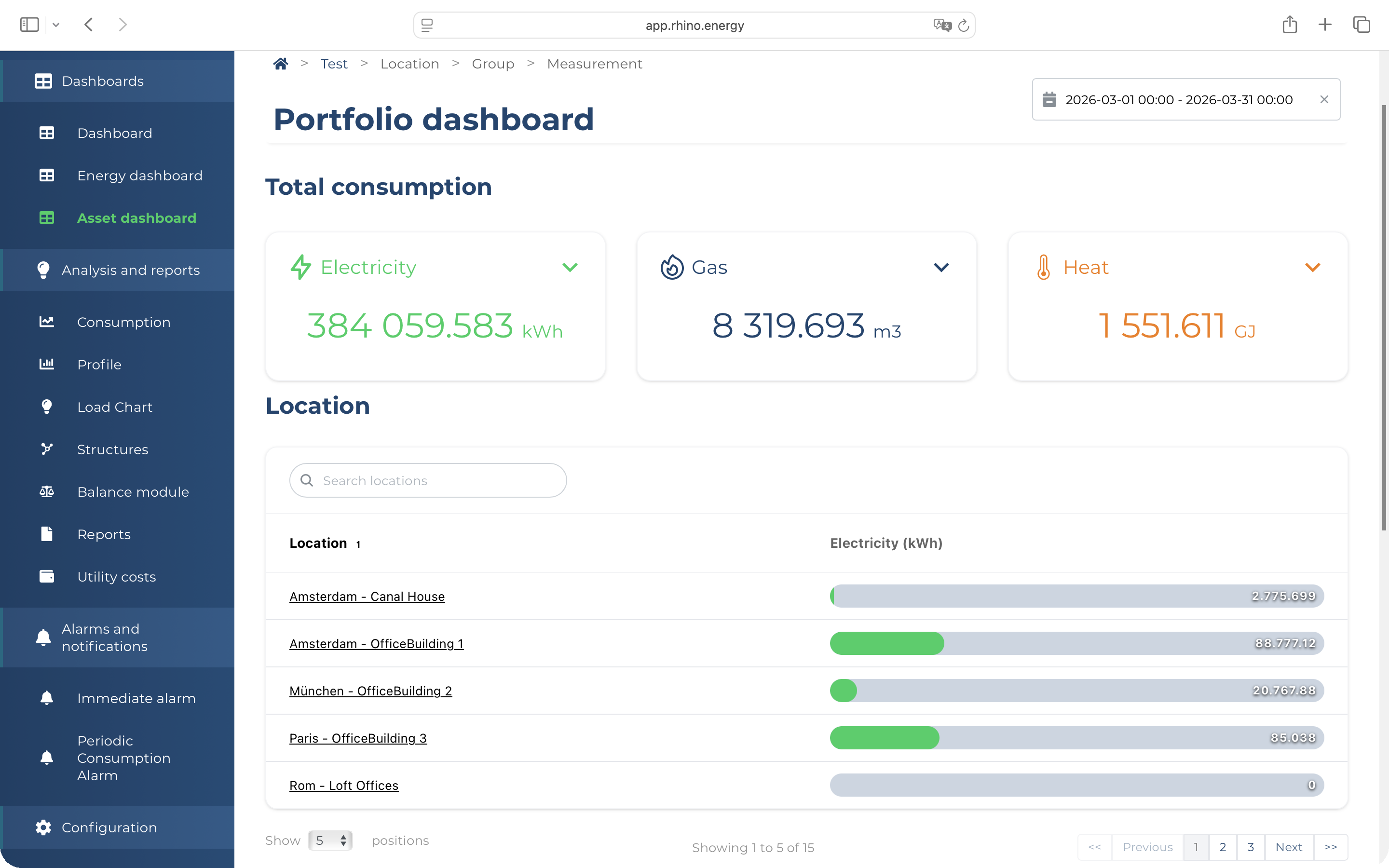
Most energy waste in commercial real estate stays invisible until the bill arrives. Rhino gives you 15-minute consumption data for every meter, floor, and tenant. Not just what's consuming. Why. Find the waste. Dispute the errors. Act before month-end.
Portfolio cost overview · Q2 2026
Electricity
847 MWh
↓ 18%
Gas
196 MWh
↓ 24%
Water
2,340 m³
↓ 12%
Heat
318 MWh
↓ 9%
Savings vs. prior period
−€23,400
Anomaly
Building 3 · HVAC circuit
4.2×
above baseline · 03:17
−30%
Average energy cost savings
15 min
Granularity for waste detection
All utilities
Electricity, gas, water, heat
40+ countries
Active worldwide
What Rhino shows you
Visibility at the level where waste hides.
Building totals from your utility supplier tell you how much you spent. They don't tell you where. Rhino goes deeper.
How it reduces costs
Three immediate levers. One data source.
Cost reduction isn't limited to these three. But standby load, anomalies, and contracted power are where the immediate gains are. All three need the same input: granular, real-time consumption data at meter level.
Seen enough to know it fits?
See which buildings are consuming above baseline and what it takes to bring them back in line.
Trusted in over 40 countries
Portfolio managers who stopped guessing.
From logistics warehouses to office portfolios. The buildings change. The problem is the same.
In the field
Cost reduction, in practice.
Pan-European Logistics
−30%
average reduction in utility costs across monitored portfolios
Savings come from three sources: identifying consumption anomalies before month-end, recovering billing overcharges through invoice disputes backed by meter data, and reallocating utility costs accurately to tenants through submeter billing.
Read case studies
Logistics
1,660
smart meters connected across 24 GLP warehouses
Pan-European logistics portfolio. Continuous consumption data from day one across every warehouse. Overconsumption patterns identified within days of connection. Full billing audit trail available for every site and every billing period.
Read the GLP case study
Common questions
Cost reduction, answered.
Within 15 minutes of connection, Rhino is collecting data from your meters. Most customers identify their first consumption anomalies within days of going live. The dashboard shows current consumption per meter, per utility, per building, updated every 15 minutes. You are not waiting for month-end data to understand what happened last week.
Yes. Rhino records timestamped consumption data at meter level for every billing period. When a supplier invoice looks wrong, you compare it directly against Rhino's readings. Billing disputes that used to take months to resolve close in days when the meter-level evidence is there. Customers regularly recover costs on invoices they would previously have paid without question.
Rhino customers average a 30% reduction in utility costs in the first year. This comes from three sources: eliminating identified waste once it becomes visible, recovering billing overcharges through dispute resolution, and accurately reallocating utility costs to tenants rather than absorbing them at portfolio level. The mix varies by portfolio type and starting baseline. For more on how tenant cost reallocation works, see Tenant Billing & Engagement.
Yes. Rhino collects electricity, gas, water, and heat consumption data from a single platform, including submeter data. All utilities are visible in the same dashboard across your full portfolio. You do not need separate systems for different utility types. Cost benchmarks, anomaly detection, and threshold alerts work the same way for all.
No. Rhino connects to existing meters via smart meter API or its own hardware devices installed on the meter. No new cabling, no BMS upgrade, no CAPEX-heavy project. Most buildings are fully connected within weeks of the contract being signed. Low installation cost is one of the reasons the ROI on Rhino typically appears within the first quarter.
Ready to see where your costs are going?
Most energy waste in a CRE portfolio is invisible until it shows up on a bill. Rhino makes it visible per meter, per floor, per tenant, before the invoice arrives.
Further reading
From the Rhino blog.

