Almost every tenant utility recharge dispute comes down to the same thing: the tenant cannot reproduce the number, and neither can you. The invoice says 14,200 euros. The lease says apportionment by lettable floor area. Somewhere between the two sits a calculation that took someone a day in a spreadsheet and that nobody can now explain line by line.
This post covers the five things tenants actually dispute, why the standard apportionment method invites the argument, what the Energy Efficiency Directive requires by 1 January 2027, and the evidence pack that closes a dispute in one email instead of three months.
What is a utility recharge dispute?
A utility recharge dispute is a formal challenge by a tenant to the utility costs a landlord has passed through, usually within the service charge. The tenant disputes either the total, the share allocated to their unit, or the method used to calculate that share. Disputes are resolved by evidence: meter readings, supplier invoices, and a calculation the tenant can follow. Where a landlord cannot produce that evidence, the charge is usually reduced or withdrawn.
The five things tenants actually dispute
Recharge arguments look varied and are not. Five causes account for most of them.
| What the tenant challenges | What they are seeing | What actually happened | What settles it |
|---|---|---|---|
| The apportionment is wrong. | Their bill rose while their occupancy and hours stayed flat. | Another tenant left, so the same total was divided across less occupied area. | Actual submetered consumption for their unit, so their bill follows their use rather than someone else's vacancy. |
| The reading is estimated. | A large catch-up charge lands after several small ones. | Nobody read the submeter for eight months, and the true-up arrived all at once. | Automated readings at a fixed interval, so no estimate is ever carried forward. |
| The meter is not theirs. | Consumption that does not match anything they operate. | A submeter was mapped to the wrong unit during fit-out and never corrected. | A documented meter to unit register, checked against a load profile that matches their operating hours. |
| The rate is inflated. | A unit rate higher than the published market rate. | Standing charges, network costs and losses were folded into a single blended rate with no breakdown. | The supplier invoice alongside the recharge calculation, showing cost components separately and no margin added. |
| The total does not add up. | The sum of all tenant bills exceeds what the building actually used. | The unmetered residual was distributed across tenants rather than absorbed. | A reconciliation showing the main meter total, the sum of submeters, and where the difference went. |
Why floor area apportionment invites the argument
Apportioning utility costs by lettable floor area is standard, defensible under most leases, and the single largest source of disputes. It assumes every square meter consumes at the same rate. Real buildings do not behave that way.
A ground floor cafe with refrigeration and extended hours consumes several times what an equivalent area of cellular office does. A tenant running a server room, a test kitchen or a trading floor is subsidized by everyone else in the building. The tenants doing the subsidizing are usually the ones with the sharpest procurement teams, which is why the challenge tends to arrive from your most sophisticated occupier rather than your smallest.
Floor area apportionment is not wrong. It is a reasonable proxy in a building with no submetering. The problem is that it is a proxy, and a proxy cannot be defended against a tenant who has measured their own consumption and found it does not match what you charged them.
The residual nobody can explain
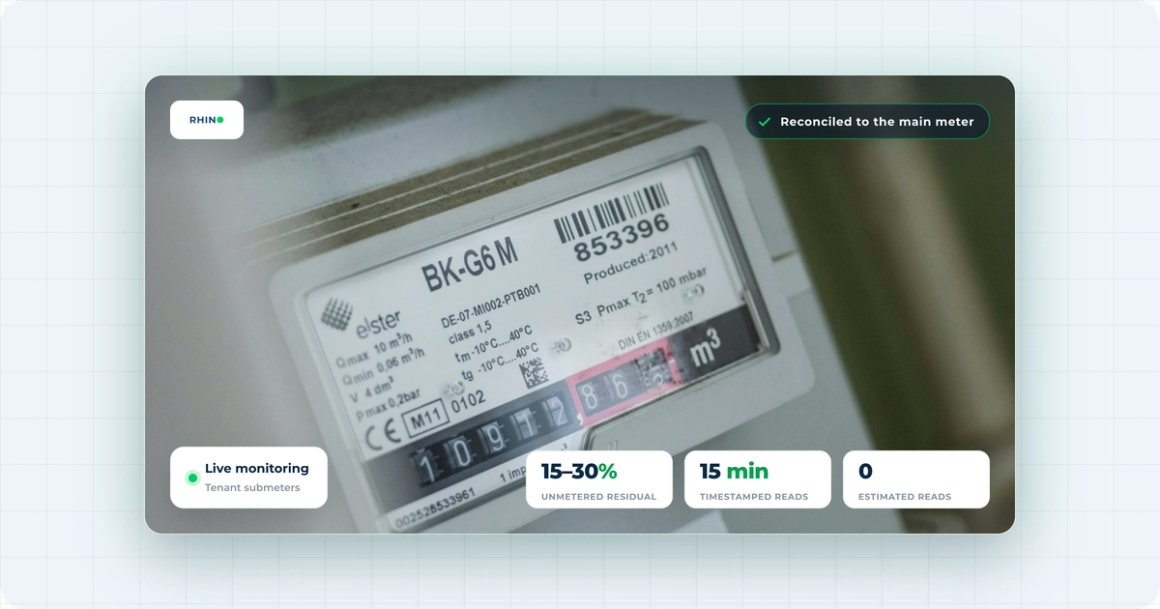
Add up every submeter in a building and compare the total against the main meter. The gap is the unmetered residual: plant, risers, lifts, car park, external lighting, and whatever was never metered in the first place. In portfolios we see, the residual routinely runs between 20% and 30% of total consumption.
That gap has to go somewhere. Usually it gets spread across tenants inside the service charge, which is defensible when you can show what it consists of, and indefensible when you cannot. A tenant who asks what the residual covers and receives no answer has just found the weakest point in your recharge. We covered how to size and attack it in where the energy in your building actually goes.
What the EED requires by 1 January 2027
The Energy Efficiency Directive sets a hard requirement that changes what "we read it annually" means in practice. Meters and heat cost allocators for heating, cooling and domestic hot water must be remotely readable. This applies to newly installed devices already, and to existing devices by 1 January 2027, unless a member state has shown that retrofitting a given case is not cost-effective.
Two clarifications, because this rule gets overstated. It covers heating, cooling and domestic hot water, not electricity submetering, which sits under separate national rules. And member states have transposed the cost-effectiveness derogation differently, so check your national implementation before budgeting a replacement program.
Where remotely readable devices are installed, the consumption information obligation follows: final users must receive their consumption data regularly and free of charge, by digital means. The practical effect is that a tenant who disputes a recharge in 2027 will often have their own consumption history in hand before they contact you. Landlords running annual manual reads will be arguing against better data than their own.
Unmetered tenant supply also enlarges your own compliance scope
There is a second cost to not submetering, and it does not appear in the service charge at all.
Where a landlord supplies energy to a tenant and the amount is not separately measured and known to that tenant, national implementations of the EED audit obligation generally require the landlord to count that energy as their own consumption. That consumption then counts toward the 10 terajoule threshold that triggers a mandatory energy audit, due by 11 October 2026.
So unmetered tenant supply does two things at once. It leaves you unable to defend a recharge, and it inflates the consumption figure that decides whether you are in scope for an audit at all. The threshold arithmetic is in the EED energy audit deadline explained.
The evidence pack that settles a dispute
When a challenge arrives, the landlord who can answer in one email has five things ready. The one who cannot spends three months assembling them under pressure.
| What the tenant needs to see | Why it settles the point |
|---|---|
| The supplier invoice for the period, unredacted on unit rates. | It proves the cost you are passing through is the cost you paid, with no margin added. |
| The main meter reading at the start and end of the period. | It fixes the total that everything else has to reconcile back to. |
| The tenant's own submeter readings at the same two dates. | It converts their share from an estimate into a measurement they can verify themselves. |
| The meter to unit register showing which meter serves their space. | It removes the most common technical error before it becomes an argument about competence. |
| The reconciliation of main meter against the sum of submeters, with the residual itemized. | It shows the difference is understood and allocated on a stated basis rather than absorbed into their bill unexplained. |
A tenant who receives that pack has almost nothing left to dispute except the apportionment method itself, which is a lease question rather than a data question.
When submetering is not worth it
Not every building justifies it, and pretending otherwise costs credibility.
A single-tenant building on a full repairing and insuring lease does not need submetering to settle recharges, because there is nothing to apportion. A small multi-let building with three similar office tenants and no unusual loads will find floor area apportionment produces a result close enough to actual use that nobody bothers to challenge it. In both cases the audit and consumption information obligations may still apply, but the dispute argument for submetering does not.
The case gets strong when tenant loads differ materially, when the residual is large or unexplained, or when a single tenant is big enough that a challenge from them is worth more than the metering costs. In a mixed-use building with retail at ground level, that is usually all three at once.
Where Rhino fits
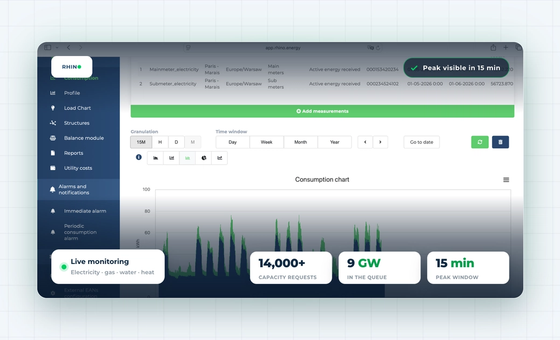
Rhino is the data layer between your meters and the systems that bill from them. It collects electricity, gas, water and heat data automatically, including submeters, at 15-minute granularity, and reconciles the sum of submeters against the main meter so the residual is a number you can see rather than a gap you absorb.
Rhino does not issue invoices and is not a billing platform. It feeds them, along with your ESG reporting and your property management stack. The distinction matters here: the reason recharge disputes drag on is almost never the invoicing system, it is that the consumption figures going into it cannot be traced back to a meter reading on a date. That is the part Rhino fixes.
Frequently asked questions
What is a tenant utility recharge dispute?
It is a formal challenge by a tenant to utility costs passed through by a landlord, usually within the service charge. Tenants dispute the total, the share allocated to their unit, or the calculation method. These disputes are resolved with evidence: supplier invoices, meter readings at the period start and end, and a calculation the tenant can reproduce.
What evidence do I need to defend a utility recharge?
Five items settle most disputes: the supplier invoice for the period showing unit rates, main meter readings at the start and end, the tenant's submeter readings for the same dates, a register showing which meter serves their space, and a reconciliation of the main meter against the sum of submeters with the residual itemized.
Can a landlord charge tenants more than the utility cost?
Passing through more than the actual cost is restricted in most jurisdictions, and reselling energy at a margin is prohibited outright in many. Standing charges and network costs can normally be recovered, but folding them into a single blended rate with no breakdown is what makes a charge look inflated even when it is legitimate.
What does the EED require for submeters by 2027?
Meters and heat cost allocators for heating, cooling and domestic hot water must be remotely readable. This already applies to newly installed devices and extends to existing devices by 1 January 2027, unless a member state has established that retrofitting is not cost-effective in that case. Electricity submetering falls under separate national rules.
Why did my tenant's bill go up when their usage did not change?
The most common cause is apportionment by floor area combined with a change in occupancy elsewhere in the building. When another tenant vacates, the same total cost is divided across less occupied area, so remaining tenants absorb the difference. Submetered billing removes this, because each tenant pays for measured consumption.
Recharge disputes end when the tenant can reproduce your number from meter readings they can check. If your submeter data still arrives as a spreadsheet once a quarter, see how Rhino automates submeter data for tenant billing.