Case Study · Logistics
24 warehouses.
One dashboard.
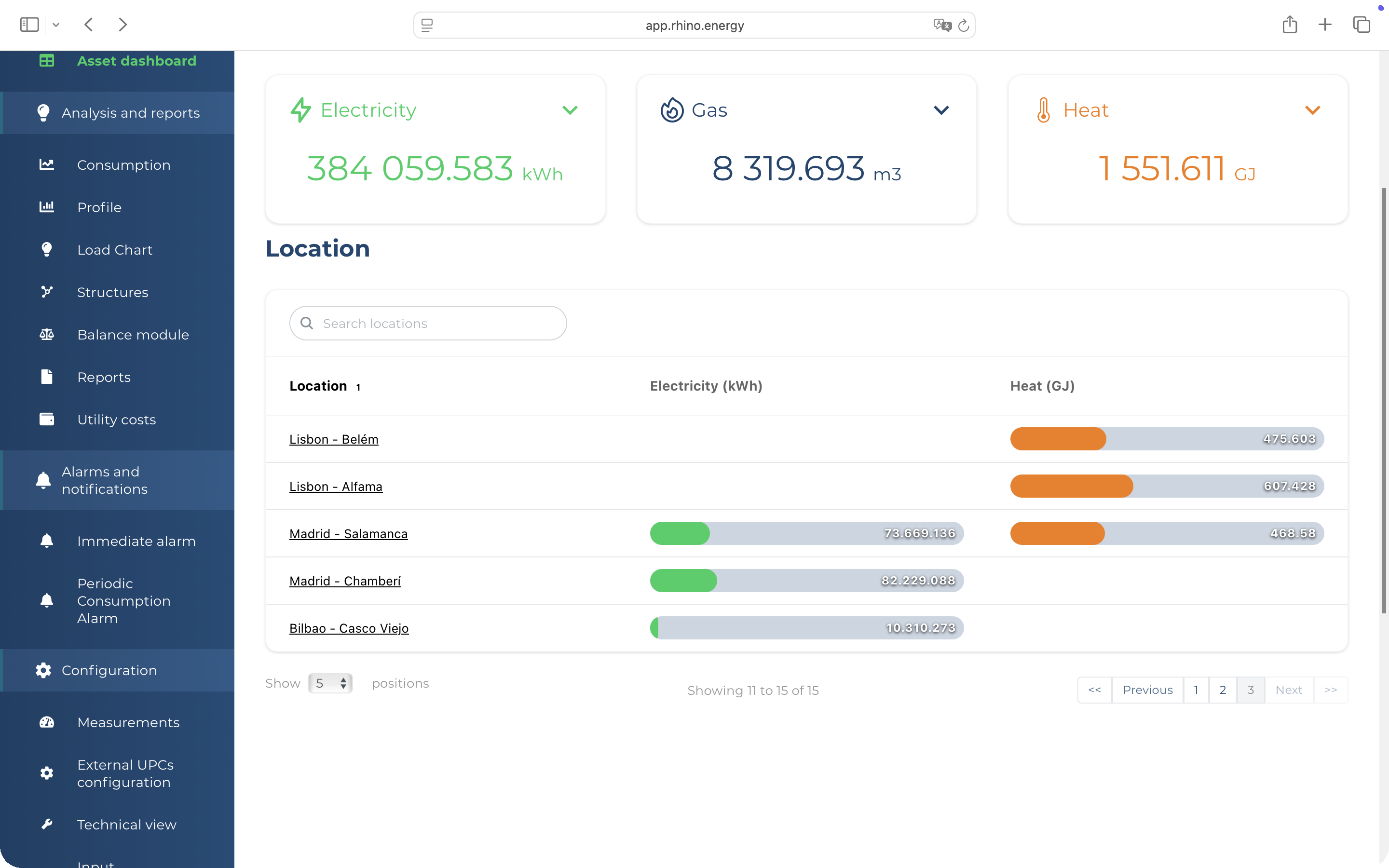
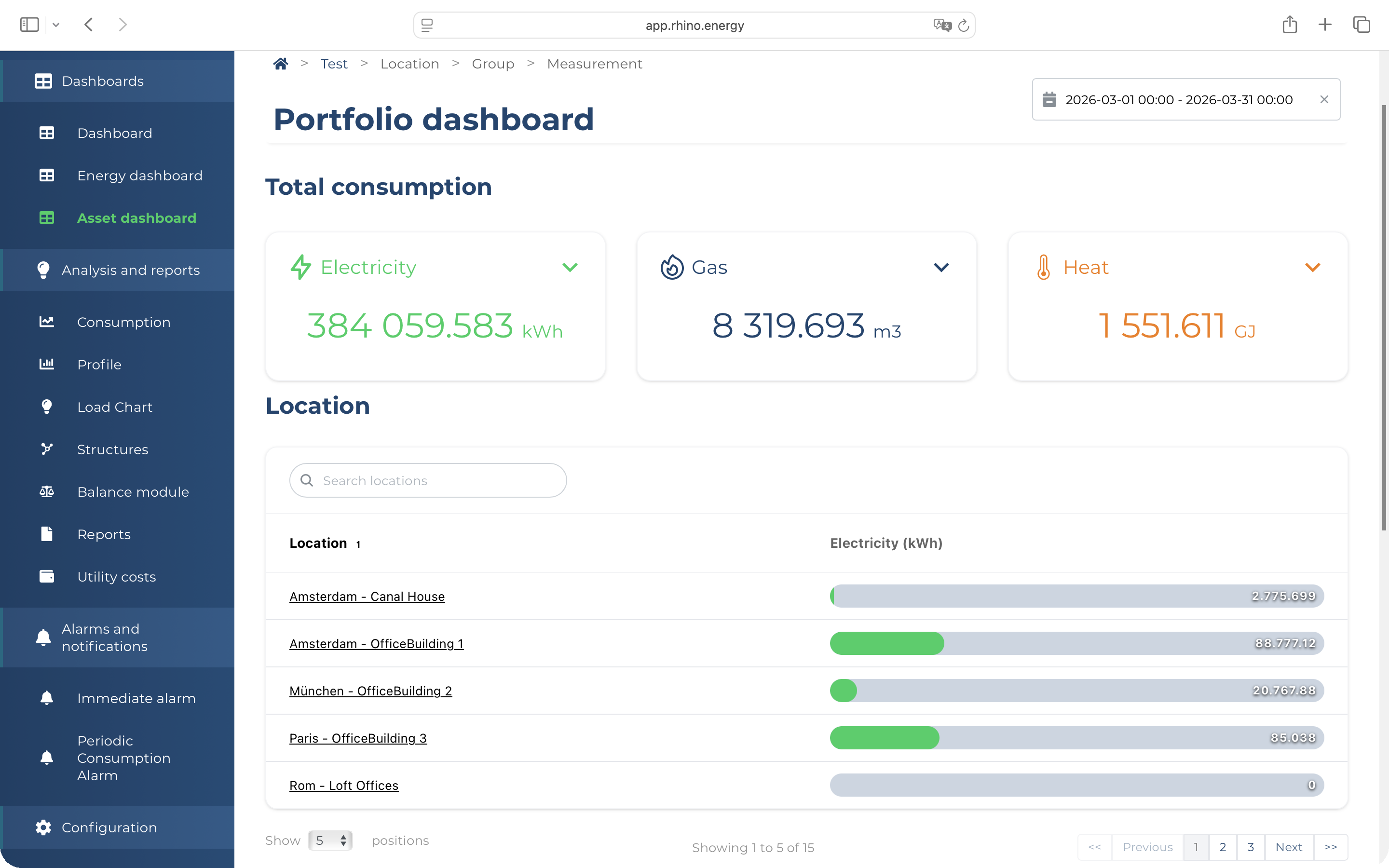
GLP deployed Rhino across 24 European logistics warehouses, connecting 1,660 smart meters to a single platform. Tenants and managers now track electricity, gas, and water in real time, with automated fault detection replacing quarterly bill reviews.
Client

Portfolio
24 warehouses
24
Warehouses monitored across Europe in a single dashboard
1,660
Smart meters installed and connected to Rhino
160k+
Daily data points delivered to tenants and managers
Real-time
Consumption visible to tenants and facility managers
The challenge
Warehouses. Hard to read.
GLP is one of the world's leading logistics real estate companies, managing warehouses and distribution centres across Europe, the Americas, and Asia Pacific. At the scale GLP operates, utility management across dozens of sites creates three distinct problems that manual meter reads and quarterly utility bills cannot solve.
Tenants needed transparent billing based on what they actually consumed, not estimates or pro-rata splits. GLP needed operational visibility across the portfolio to spot faults before they appear in a bill. And many meters across the portfolio were physically hard to reach, making manual reads inconsistent and error-prone.
Improved energy efficiency in their buildings is a core goal for GLP worldwide. Achieving it required accurate, automated, and real-time utility data at every site and at every meter level.
Remote monitoring for tenant billing
GLP's tenants needed utility costs based on actual consumption per space, per period. Manual reads could not support that at scale. Automated submetering, connected remotely, was the only viable path.
Tools tenants could actually use
Giving tenants visibility into their own consumption was a priority, not just an afterthought. GLP needed a system that surfaced per-tenant data in a way that helped them manage their energy use actively.
Hard-to-reach meters read automatically
Many meters across GLP's warehouse estate were located in mechanical rooms, rooftop plant areas, or other difficult access points. Manual reads were inconsistent. Remote reading with no physical access requirement was essential.
In their own words
GLP on Rhino.
Watch how GLP's property management team describes the deployment across their warehouse portfolio and what real-time utility data changed for their operations and tenant relationships.
The solution
Built around existing infrastructure.
Rhino implemented remote utility monitoring across three types of GLP warehouse, adapting to each building's existing infrastructure rather than requiring a full replacement. The goal throughout: connect every meter to a single platform, with zero disruption to building operations.
1
Older buildings: meters adjusted or upgraded
In warehouses built several years prior, existing meters were adjusted or replaced where needed, or fitted with a communication module enabling remote reading. No new cabling runs, no infrastructure overhaul.
2
New buildings without BMS: meters installed from scratch
In newly built warehouses that lacked a building management system, Rhino installed meters from scratch and connected them directly to the Rhino platform, giving GLP full submeter coverage from day one.
3
New buildings with BMS: integrated and validated
Where a BMS was already in place, Rhino integrated with the existing meters and validated correct operation. This formed the baseline for warranty tracking and fault resolution on the BMS installation.
4
Billing meters connected via utility supplier agreements
Rhino negotiated with utility suppliers at each location to connect the main billing meters to the platform. This gave GLP billing-meter data within the same system as the submeters, enabling a full balance check: do the submeter reads add up to the billing total? Faults surface immediately, not a month later.
The results
What changed for GLP.
1,660
Smart meters connected across 24 warehouses
Electricity, gas, and water. All reading automatically. All visible in one platform. No manual reads. No quarterly lag.
Real-time consumption visibility
Tenants and facility managers at every GLP warehouse can now track electricity, gas, and water consumption in real time through a single dashboard. Consumption trends visible immediately. Questions like "is the heating running correctly?" and "is there a water leak?" get answered from the platform, not the bill.
Accurate tenant billing
Submeter data flows into GLP's billing process as actual consumption per tenant per billing period. No estimates. No disputes over pro-rata splits. The balance between billing meters and submeters is visible at all times, allowing GLP to identify discrepancies before they become problems.
Greener buildings, by design
Smart metering is now standard in all new GLP warehouse developments. The implementation supports GLP's global goal of improved energy efficiency: lower utility consumption, reduced carbon footprint, and greater biodiversity in the areas their buildings operate. ESG outcomes supported by verified metered data, not estimates.
The standard they set
Smart metering. Now the default.
When the Rhino implementation was complete, GLP did not treat it as a one-off project. Smart metering was adopted as the standard approach in all new GLP warehouse developments going forward.
The system that monitors consumption of electricity, water, and gas sends data from every meter to a single platform. Tenants and centre managers can track utility trends in real time. The heating control, the energy appliances, the water circuits: all visible from one place.
For GLP's tenants, the result is an innovative set of tools for efficient utility management built into the building from day one. For GLP, it is a measurable foundation for the energy efficiency goals the company pursues across its global portfolio.
Providing our clients with buildings of the highest standard affects the efficiency of energy consumption.
MO
Maciej Olszyński
Property Manager, GLP
Utility data
Rhino
Real-time electricity, gas, and water monitoring across all 24 warehouses. 1,660 connected meters. 160,000+ daily data points. The data layer the billing and operational systems run on.
Property owner
GLP
Global logistics real estate company operating across Europe, the Americas, and Asia Pacific. Committed to the highest building standards and improving energy efficiency across their international portfolio.
Your portfolio.
All utilities. Real-time.
Rhino connects to your existing metering infrastructure across logistics, retail, office, and residential. No infrastructure overhaul. Active in 40+ countries.
Further reading
From the Rhino blog.