ENERGY STAR benchmarking does not have to start with a stack of utility bills. Portfolio Manager scores the energy data you enter, and the ENERGY STAR certification guide accepts data from meters the building owns, as long as they are reasonably accurate and their records can be shown.
This post covers what Portfolio Manager needs from your data, where bill-based benchmarking breaks, how metered data compares, and the cases where bills are still the better source.
What is ENERGY STAR benchmarking in Portfolio Manager?
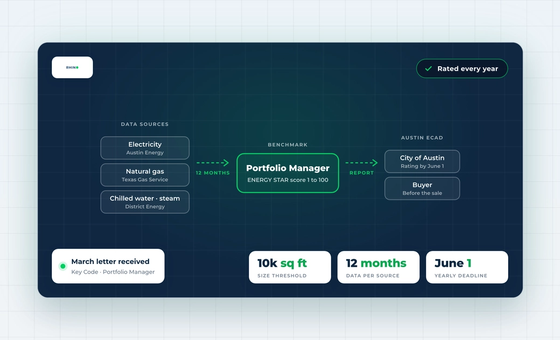
ENERGY STAR benchmarking means entering a building's energy use into Portfolio Manager, the free tool from the ENERGY STAR program, to get metrics such as energy use intensity and the 1 to 100 ENERGY STAR score. The score compares the building with similar buildings nationwide, adjusted for weather and use. Most US benchmarking laws, including NYC Local Law 84 and Boston BERDO, have owners report through it.
Our ENERGY STAR Portfolio Manager guide covers the laws, the score and certification in more detail. This post is about the data underneath.
What data does Portfolio Manager need for an ENERGY STAR score?
An ENERGY STAR score needs at least 12 full consecutive calendar months of energy data for all active meters and all fuel types, covering the whole building. That is the ENERGY STAR score eligibility rule, and it applies whether the numbers come from bills or meters.
Each meter entry is a start date, an end date and a usage figure. Portfolio Manager turns entries into calendar months by taking the average daily use over each entry and adding it up for the days in each month. According to the Portfolio Manager glossary, a full month includes its first and last day.
Three checks catch most data problems. Gaps or overlaps of more than one day between entries raise an error, per ENERGY STAR's guide to getting utility data into Portfolio Manager. Any single entry longer than 65 days removes weather-normalized metrics. And an entry can be flagged with the Estimation checkbox, which matters for certification, as the next sections show.
Where does bill-based ENERGY STAR benchmarking go wrong?
Utility bills were designed for invoicing, not benchmarking. The mismatch shows up in four places.
| What goes wrong | What happens when you benchmark from bills | What happens when you benchmark from meter data |
|---|---|---|
| Billing periods do not match calendar months. | Each bill covers part of two months, so Portfolio Manager has to spread it across both. | Totals can be cut at midnight on the first of each month, so each entry is one calendar month. |
| The utility estimates a reading. | An estimated bill has to be flagged and replaced later, and the correction often arrives months after the fact. | A missing reading shows up within days, so it can be fixed before the 12-month period closes. |
| Entries leave a gap or overlap. | Many utilities end one cycle and start the next on the same date, and a missing or duplicated bill creates a gap or overlap. | Monthly totals built from continuous readings line up end to end. |
| Some meters have no bill you can see. | Tenant-paid meters need bills from each tenant, or aggregated whole-building data from the utility where it is offered. | Building-owned meters and submeters are read directly, which also shows who used the energy. |
None of this makes bills unusable. It makes them slow. Most of the work in a benchmarking season goes into chasing, keying and correcting them, not into the benchmark itself.
Does ENERGY STAR accept data from building-owned meters?
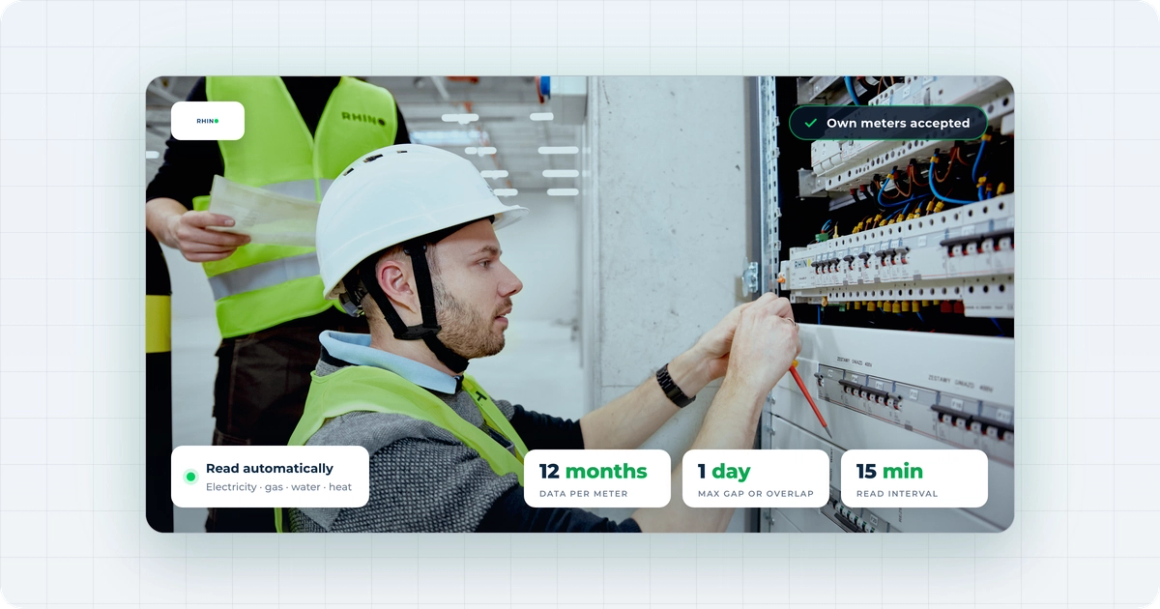
Yes. The ENERGY STAR Licensed Professional's Guide lists building-owned master meters and submeters next to utility bills as documentation the verifier can review. Where data is not available from the utility or fuel supplier but the property has its own meters, the Licensed Professional verifies the records of those meters. The meters do not need to be utility-grade, but they should have a reasonable level of accuracy.
Plan for one condition. If a certification application is audited, or the review team asks, the online records from those meters have to be provided to EPA. EPA can request bills, meter records or invoices for any application and can deny it if the data cannot be confirmed. Metered data works when the full history is kept and can be exported on request.
Estimates are the other line to watch. The guide tells the Licensed Professional to check that no estimated, simulated or model values have been used. An estimated month that is never replaced can stop a certification even when the score itself calculates.
How do submeters fit into Portfolio Manager without double counting?
A submeter belongs in the metrics only when it measures energy that no other meter in Portfolio Manager already covers. A tenant submeter behind a utility meter that is already entered would count the same energy twice, so it stays out of the metrics. Certification applications list such meters under additional meters marked as not associated, and the Licensed Professional confirms that assignment.
The submeter still earns its place. It explains where the whole-building number comes from: which tenant, which floor, which plant room.
When are utility bills still the better source?
Bills stay the simplest source in three cases. Where the utility already delivers aggregated whole-building data into Portfolio Manager through web services, that covers the utility meters with very little effort. Bulk fuels such as fuel oil and propane are entered as delivered, or divided over the months a purchase covers, and the delivery invoice is the record.
The third case is a small building with one utility meter per fuel, monthly reads that arrive on time, and no tenant meters. Entering those bills takes a few minutes a month, and metered data adds little to the benchmark itself. Its value there is in finding waste, not in filing the report.
How does Rhino feed Portfolio Manager with metered data?
Rhino reads electricity, gas, water and heat meters, including submeters, through existing smart meters or Rhino's own hardware, at 15-minute intervals by default. From that history it builds calendar-month totals per meter, ready to load into Portfolio Manager's spreadsheet templates. Consultants and ESG platforms can take the same data through the Rhino Utility Data API.
The bigger gain sits outside the benchmark. A score is one number a year. 15-minute interval data shows what moved it: the plant that runs all weekend, the tenant whose load doubled, the floor that never switches off.
If your benchmarking still starts with a hunt for bills every spring, see how Rhino supports ESG and compliance reporting with metered data from all utilities.
Frequently asked questions
Can I use smart meter data instead of utility bills in ENERGY STAR Portfolio Manager?
Yes. Portfolio Manager takes meter entries with a start date, an end date and a usage figure, whatever the source. For ENERGY STAR certification, the Licensed Professional's Guide accepts data from building-owned meters that are reasonably accurate, even if they are not utility-grade. The meter records must be available if EPA audits the application or asks for documentation.
How many months of data does Portfolio Manager need for an ENERGY STAR score?
An ENERGY STAR score needs at least 12 full consecutive calendar months of energy data for every active meter and every fuel type in the whole building. A full month includes the first and last day of that month. Gaps or overlaps of more than one day between meter entries raise an error that has to be fixed first.
Can I use estimated bills in Portfolio Manager?
You can enter estimated bills and mark them with the Estimation checkbox, then replace them with actual figures later. For ENERGY STAR certification, the Licensed Professional must check that no estimated, simulated or model values are in the application. An estimated month that is never replaced can stop a certification even when the score calculates.
Should tenant submeters be entered in Portfolio Manager?
Only when they measure energy that the other meters in Portfolio Manager do not already cover. A submeter behind a utility meter that is already entered would double count that energy, so it stays out of the metrics. Certification applications list such meters as not associated, and the Licensed Professional confirms the assignment.