
Austin energy disclosure law
Austin ECAD and the June 1 rating.
Austin's Energy Conservation Audit and Disclosure ordinance requires commercial buildings of 10,000 sq ft or more, served by Austin Energy, to rate their energy use every year and report it by June 1. The rating also goes to any buyer before a sale. The Portfolio Manager route needs every utility, every month, and that is where the work is.
What ECAD requires
A yearly rating, and a buyer who gets to see it.
ECAD is Chapter 6-7 of the Austin City Code. For commercial buildings it is a benchmarking and disclosure law: rate the building every year, report the rating to Austin Energy, and share it when you sell.
Who is covered
Non-residential buildings of 10,000 sq ft or more in Austin that get their electricity from Austin Energy. Manufacturing is the only named exemption, and only once the owner files it with Austin Energy. Industrial buildings are not exempt by default.
A rating every June 1
Austin Energy mails compliance letters each March. By June 1, the owner reports an energy rating through Austin Energy's Key Code option or through ENERGY STAR Portfolio Manager.
Shared with the buyer
Before a sales contract is signed, the owner must give the rating to the buyer or prospective buyer, and send a copy to Austin Energy within 30 days. A weak rating becomes part of the deal.
Two ways to report
Key Code or Portfolio Manager. Only one sees every utility.
The Key Code route is quick because it uses only Austin Energy's electricity data. The Portfolio Manager route gives a full picture and an ENERGY STAR score, but the owner has to gather everything else.
Key Code: electricity only
Austin Energy calculates energy use from its own electric data and sends it with a unique Key Code. The owner confirms the property details online. The result is a percentile rank against similar Austin Energy customers.
Portfolio Manager: all energy
At least 12 months of data for every energy source. Austin Energy supplies whole-building electricity by spreadsheet, but needs a signed release from each tenant in buildings with three or fewer, or an aggregation request in buildings with four or more.
Gas and district energy
Natural gas data comes from Texas Gas Service, which the owner requests separately. Chilled water and steam come from Austin Energy's district energy team. Every source has its own request and its own format.
Not filing is a criminal offense. Each failure to comply is a separate offense, with fines of up to $500, or up to $2,000 where there is criminal negligence. The record owner is presumed responsible. Apartment properties with five or more units have their own ECAD rules: an energy audit every ten years, results shared with tenants, and a required 20% cut for properties using more than 150% of the local average. Sources: Austin Energy and Austin City Code Chapter 6-7, checked October 2026.
Rhino's role
Be ready before the March letter arrives.
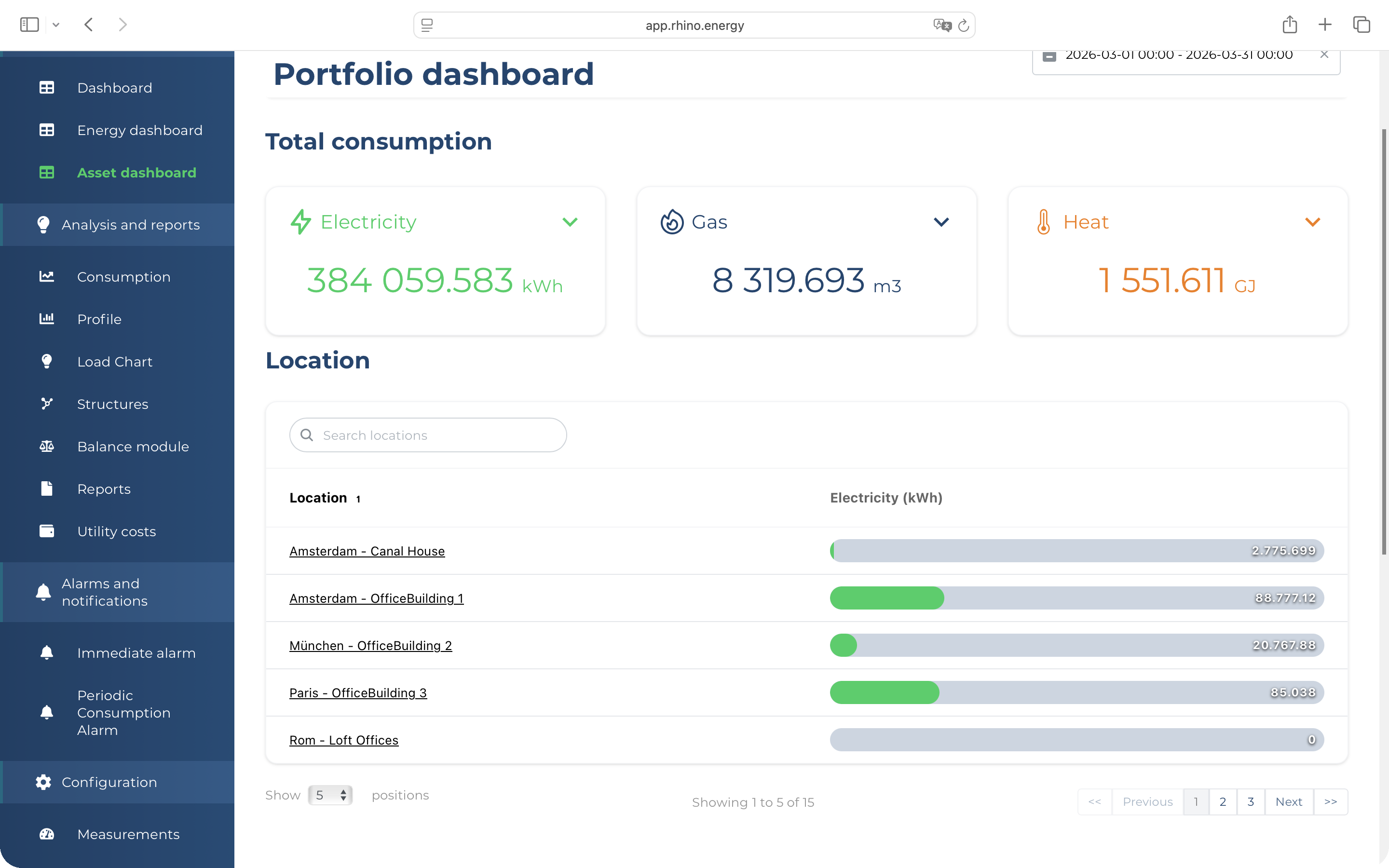
Most of the ECAD effort is collecting twelve months of data from different utilities and tenants, every spring. Rhino collects it all year from the meters themselves, so the filing starts from complete data.
01
Every utility in one place
Electricity, gas, water and heat, including tenant submeters, read through existing smart meters or Rhino hardware, which is FCC certified for the US. One history per building, instead of separate requests to Austin Energy, Texas Gas Service and your tenants.
02
Twelve complete months, ready to upload
Export consumption per meter by calendar month and load it into ENERGY STAR Portfolio Manager. No missing month to chase in May, and the same data feeds your ESG platform through the Rhino Utility Data API.
03
Improve the rating before a sale
Austin Energy recommends looking for improvements when a building ranks below the 50th percentile. Rhino's 15-minute data shows where the energy goes: after-hours HVAC, a tenant's load, a system that never switches off. Fix those before the rating lands on a buyer's desk.
What Rhino covers
All utilities
Electricity, gas, water, heat, including tenant submeters. Every source a Portfolio Manager rating needs, in one platform.
15 min
Default data granularity, stored from day one. Monthly totals are built from measured intervals.
June 1
The yearly ECAD deadline. With the data already complete, filing starts from finished numbers instead of a spring of chasing bills.
Common questions
Austin ECAD, answered.
ECAD, the Energy Conservation Audit and Disclosure ordinance, is Chapter 6-7 of the Austin City Code. It requires commercial buildings to rate their energy use every year and disclose the rating to buyers, apartment properties to complete energy audits and share the results with tenants, and older homes to be audited before sale. It applies to properties that get their electricity from Austin Energy.
Non-residential buildings of 10,000 sq ft or more of gross floor area in Austin that receive electric service from Austin Energy. That includes office, retail, civic and industrial buildings. Manufacturing facilities can be exempt, but only with a Texas manufacturing sales tax exemption and an exemption filed with Austin Energy.
June 1 every year. Austin Energy mails compliance letters to covered owners each March. Owners who did not get a letter can contact the ECAD help desk at Austin Energy.
Both satisfy the ordinance. Key Code is the simpler route: Austin Energy calculates the rating from its electricity data and the owner confirms the property details. Portfolio Manager takes more work, because it needs at least 12 months of data for every energy source, including natural gas from Texas Gas Service, but it gives a fuller picture and an ENERGY STAR score that investors and other programs recognize.
Each failure to comply is a separate criminal offense, with a fine of up to $500, or up to $2,000 where criminal negligence is shown. The record owner of the property is presumed responsible, and violations are reported to the City of Austin Municipal Court.
Yes, with different rules. Properties with five or more units need an energy audit by a certified professional in the year the property turns ten, and every ten years after. Results must be posted and given to current and prospective tenants. Properties using more than 150% of the local average per square foot must cut use by 20% within 18 months.
File ECAD from data you already have.
Rhino connects to the meters in your Austin buildings and keeps a complete history for every utility, so June 1 is an upload, not a scramble.
Further reading
From the Rhino blog.

