Solutions
Cost ReductionESG & ComplianceTenant Billing & EngagementProperty ManagementPortfolio OperationsUtility Data API
Product
Utility Data AutomationPlatformElectricity MonitoringWater MonitoringGas MonitoringHeat MonitoringSolar MonitoringData SourcesHardwareUtility ConnectorsThird Party Infrastructure
Tools
All tools →Meter compatibilityUtility provider coverage
Industries
All industries →LogisticsRetailOfficeResidentialStudent HousingHospitalityHealthcare
Case StudiesBlogPartners
NLPLDE
Book a Demo
Rhino × Measurabl
Integration Partner

Complete & accurate utility data. In Measurabl.

Rhino connects at the meter: electricity, gas, water, and heat, plus submeters and on-site solar. Meter-level actuals flow into Measurabl on an automated schedule, wherever the building sits. Real-time, timestamped data for GRESB, CSRD, SFDR, and CRREM. No manual exports, no bill-based estimates.
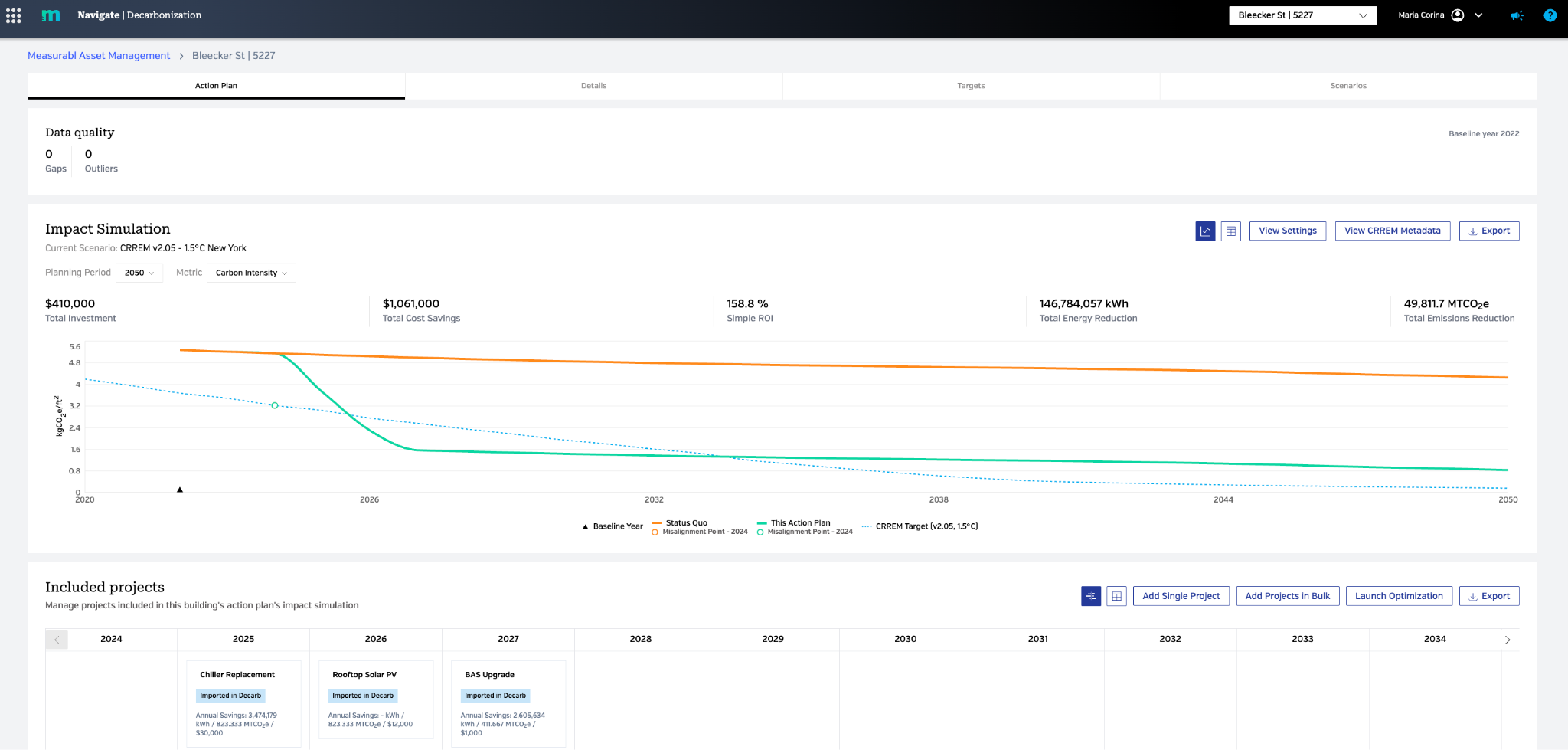

Measurabl Navigate: CRREM alignment, impact simulation, and decarbonization planning, running on Rhino meter data
Award-winning platform
CleanTech Breakthrough Awards edie awards Global ESG Awards Property Week PropTech Connect
How they fit together

Meter data and bill data, both in Measurabl.

Measurabl already automates utility data collection at global scale, connecting to thousands of utility providers worldwide. Rhino complements that with direct connections at the meter: submeters, tenant meters, heat interface units, on-site generation, and everything that happens between two bills. Different sources answer different questions, and portfolios that need both run them together.

Two data types, not two vendors. Bills tell you what was invoiced. Rhino tells Measurabl what actually happened at the meter.

Bill and account data
Meter-level data via Rhino
Frequency
Monthly, weeks in arrears
15-minute intervals, near real-time
Granularity
Whole building or account
Per meter, including submeters
Coverage
Billed accounts and utilities
All utilities, plus on-site solar
Effort
Download, reformat, upload
Automated feed, no touch
Audit trail
Estimates and allocations
Timestamped, traceable to the meter

Measurabl provides broad utility data coverage across global portfolios. Rhino adds meter-level and submeter-level data alongside it. What Rhino can read depends on the meter, so we assess the estate building by building before anything is promised.

The workflow

From meter to Measurabl. Four steps.

Once Rhino is connected, the data flow is fully automated. No manual steps, no periodic exports, no reconciliation.

1
Meter connection
Rhino connects to your electricity, gas, water, and heat meters, plus submeters and on-site solar, via utility network APIs or on-site hardware. Works with existing infrastructure. No replacements or retrofits required.
2
Real-time collection
Consumption is collected at 15-minute intervals or better, depending on meter capability. Data is validated against expected patterns. Gaps and anomalies are flagged automatically before they reach Measurabl.
3
API delivery
Normalized, timestamped meter data is pushed into Measurabl via a direct API connection. Quantum Cloud receives fresh interval data on a configured schedule, with full meter-level granularity.
4
Measurabl delivers outcomes
Your ESG team works in Measurabl as usual, now with meter-level actuals alongside the provider and bill data already flowing in. GRESB submissions carry readings per building. CSRD and SFDR disclosures trace back to a meter ID. Decarbonization plans run on real intervals.
In Measurabl

See where your data actually stands.

Measurabl's Data Manager scores meter completeness, floor area coverage, open gaps, and open outliers across the portfolio. Those four numbers are how an ESG team knows whether a disclosure will hold up. They are also exactly what a meter-level feed moves.

Rhino closes gaps at the source instead of after the fact. Meters that never appeared on a bill get connected, intervals arrive on schedule, and anomalies are flagged before they land in Measurabl rather than surfacing as an outlier weeks later. Completeness stops being a quarterly clean-up and becomes a property of the feed.
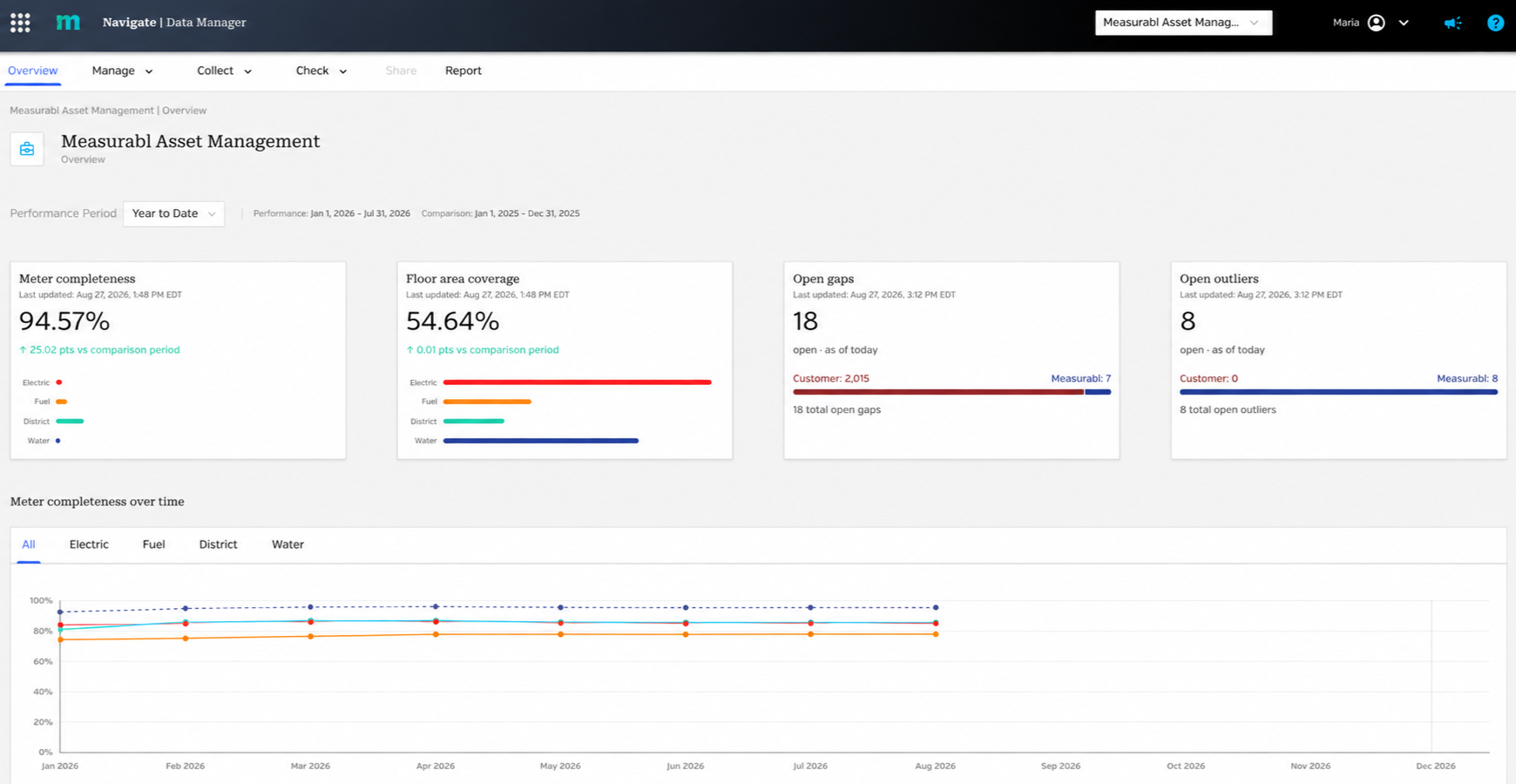
Measurabl Data Manager: meter completeness, floor area coverage, open gaps, and open outliers across a real estate portfolio

Measurabl Data Manager. Completeness, coverage, gaps, and outliers across the portfolio. Screenshot supplied by Measurabl.

Benefits

What changes when the data is right.

Measurabl brings the portfolio context: reporting, benchmarking, risk, and decarbonization planning. Rhino adds a second automated source of utility data, read straight from the meters. Here is what that adds in practice.

Audit-ready by default

Rhino data is timestamped, validated, and traceable to source meter. When an auditor asks how you derived a consumption figure, the answer is a meter ID and a timestamp, not a spreadsheet and an assumption.

GRESB, CSRD, SFDR and CRREM covered

GRESB submissions carry actual meter readings per building. CSRD Scope 1 and 2 energy data is complete and consistent. SFDR disclosures rest on real consumption. And a CRREM pathway is only as honest as the intensity you measure against it.

Beyond bill data

Bills are monthly and lag by weeks. Rhino feeds Measurabl interval data straight from the meter, so performance shows up when it happens, not a billing cycle later. The gap between estimate and actual closes.

Submeters and on-site production included

Tenant submeters and on-site solar rarely appear on a utility bill. Rhino captures them at the meter and feeds them into Measurabl, so common-area, tenant, and generation data land in the same platform as the rest.

No manual exports

Data flows on a configured schedule. No one downloads a CSV from a utility portal, reformats it, and uploads it to Measurabl. That loop is removed. What was a monthly task becomes invisible.

Depth where bills stop

Provider and bill connections reach the account. They do not reach a tenant submeter, a heat interface unit, or a PV inverter sitting behind the main meter. Rhino connects to those directly. Europe is an important focus for the collaboration, where expanding automated coverage across complex portfolios is a strategic priority, and the same meter-level connections work for customers outside Europe.

The full journey

Measure once. Then manage, report, act.

Measurabl supports organizations across the full sustainability journey, from data management and reporting through benchmarking, risk, decarbonization, and investment planning. Quantum Cloud, its global real estate data repository, brings that information together. Rhino contributes at the measurement stage, with meter-level and submeter readings collected automatically at the source.

Rhino + Measurabl
Measure
Meter-level electricity, gas, water, and heat actuals across the portfolio, collected automatically at the source, alongside the provider and bill data Measurabl already brings in.
Measurabl
Manage
Gaps identified, information validated, completeness tracked over time, so the data behind a sustainability program stays trustworthy between reporting cycles.
Measurabl
Report
Disclosure workflows for frameworks including GRESB and SFDR, running on stronger underlying data instead of estimates and allocations.
Measurabl
Understand
Benchmarking, trend analysis, and risk and opportunity identification across individual assets and the portfolio as a whole.
Measurabl
Act
Operational improvements and decarbonization plans prioritized on actual building performance, including alignment with CRREM pathways.
Measurabl
Create value
Sustainability performance connected to the numbers the business already runs on: capital planning, risk, NOI, ROI, and long-term competitiveness.
About Measurabl

Built for real estate. Proven at global scale.

Measurabl helps owners, operators, and investors quantify sustainability across their portfolios. It brings bill data, emissions, ratings, and meter interval data together in one model to power benchmarking, disclosure, decarbonization, and transaction risk analysis.

Measurabl reports to voluntary and mandatory frameworks including GRESB, SFDR, and ENERGY STAR, and is a repeat ENERGY STAR Partner of the Year. Its modules cover the full journey: Navigate, Optimize, Comply, Disclosure, and Diligence.

Visit measurabl.com

1,000+
Organizations
Owners, operators, and investors across the real estate ecosystem
97
Countries
One of the largest sustainability data footprints in real estate
2.6B m²
Real estate managed
Tracked and benchmarked through the Measurabl platform
€5T
Assets under management
Represented by the organizations on the platform
343M
Metric tons CO₂e tracked
Emissions measured and reported through Measurabl
6x
ENERGY STAR Partner of the Year
Repeat recognition for sustainability leadership
Trusted, high-quality data is essential as investor scrutiny, regulatory requirements, and internal accountability continue to increase. Our partnership with Rhino expands the breadth and reliability of the data available to customers across Europe, giving them greater confidence in their reporting, compliance and business decisions.
Maureen Waters, CEO of Measurabl
Maureen Waters
CEO, Measurabl
Common questions

Measurabl x Rhino, answered.

Rhino collects meter-level utility data from your buildings (electricity, gas, water, and heat, plus submeters and on-site solar) across your entire portfolio. That data is normalized and delivered into Measurabl via API on an automated schedule. Your ESG team sees complete, timestamped actuals in Measurabl without manual data entry or exports.
With Rhino, yes. Rhino collects consumption at 15-minute intervals or better and feeds it into Measurabl on an automated schedule, so your dashboards and reports reflect up-to-date interval data rather than month-old utility bills. Analysis and action planning run on current numbers.
Yes. Measurabl already automates collection from utility providers at global scale. Rhino automates the layer underneath it: the capture and delivery of meter and submeter readings, including the ones that never reach a bill. Between the two, your team stops downloading CSVs from utility portals and uploading them by hand.
Bill data is monthly, lags by weeks, and covers billed accounts only, so it misses submeters, tenant meters, and on-site generation. Rhino feeds Measurabl interval data straight from the meter, including the submeters and utilities that never appear on a bill. The two are complementary: bills give you spend and market breadth, Rhino gives you complete, timestamped performance inside the building.
Rhino specializes in meter-level utility data collection and monitoring: electricity, gas, water, and heat, including submeters, tenant meters, and on-site generation. Measurabl is a sustainability data management platform with its own global utility data collection, alongside data quality, reporting, benchmarking, risk, and decarbonization workflows. Rhino complements Measurabl by adding a second automated source of meter-level data. The two are complementary, not competing.
No. Rhino connects at the meter, and a meter works the same way in Chicago as it does in Rotterdam. Where a building has electricity, gas, water, or heat metering, Rhino can read it and deliver it into Measurabl. European portfolios are where bill-based coverage is most fragmented, so that is where the integration proves out first, but nothing about it is limited to the region.
Book a demo with Rhino. The team will assess your meter estate, determine the right connection path for each building, and configure the data feed into your Measurabl account. Most clients are live within weeks of onboarding.

Already using Measurabl?
Get accurate data into it.

Rhino connects to your meter estate and starts feeding Measurabl automatically. Book a demo and we'll assess your portfolio in the first session.