
Minimum Energy Efficiency Standard
The UK commercial MEES deadline.
MEES sets the minimum EPC rating you need to let commercial property in England and Wales. Today the floor is EPC E. From 2031, buildings over 1,000 m² will need EPC B. Knowing which of your buildings fall short starts with measured data.
The rule today
Right now, the floor is EPC E.
MEES is the statutory minimum energy efficiency standard for privately rented property in England and Wales. It uses the building's EPC rating as the trigger. Since April 2023 it applies to all commercial lettings, not just new ones.
F and G cannot be let
A landlord generally cannot let, or continue to let, a commercial building rated F or G unless it is improved to at least EPC E or a valid exemption is registered.
All lettings since April 2023
The EPC E minimum first applied to new and renewed leases in 2018. Since April 2023 it covers all commercial lettings, including leases already running.
Penalties up to £150,000
Non-domestic breaches scale with the building's rateable value and can reach up to £150,000 per property, with the breach published on a public register.
The 2031 change
EPC B by 2031 for buildings over 1,000 m².
On 18 June 2026 the government published its interim response to the long-running MEES consultations. It settled the two questions the market had been waiting on: the standard, and the date.
Today: EPC E stays
Unchanged. The F and G letting restriction remains in force across England and Wales, with no reduction in the current standard.
Dropped: no EPC C by 2027
The interim EPC C milestone previously proposed for 2027 has been dropped and will not be taken forward.
From 2031: EPC B for larger buildings
All privately let non-domestic buildings over 1,000 m² will need EPC B, where cost-effective. Smaller buildings stay at EPC E, with no set deadline to go further.
The direction is set, the fine print is not. The seven-year payback test and existing exemptions stay in place, so only practical, cost-effective improvements are required. The change still needs secondary legislation through Parliament, and the government has yet to confirm final penalty levels, a possible shell-and-core exemption, and whether tenants will carry duties of their own. For the full breakdown, read the commercial MEES guide.
Rhino's role
The measured layer under your MEES plan.
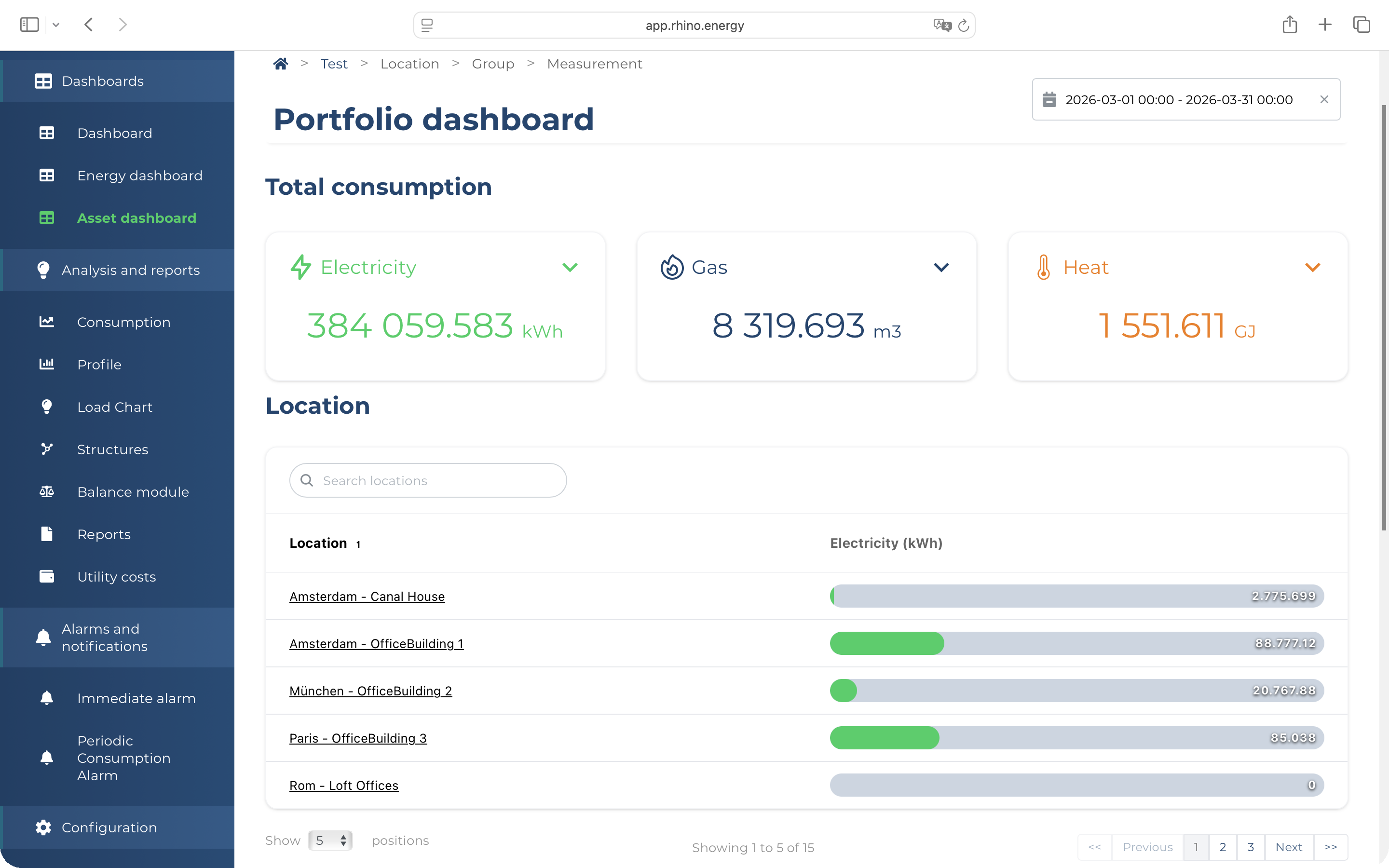
An EPC is an asset rating produced by an assessor, not a meter read. But the decisions around it, which buildings to prioritise, which measures to fund, and whether they worked, all rest on knowing what each building really consumes. Rhino delivers that data automatically.
01
Baseline every building
Connect the meters already in your buildings, via smart meter connection or Rhino hardware, and see actual consumption for electricity, gas, water, and heat, including submeters. Rank your portfolio by real performance instead of the last EPC someone filed.
02
Prove the improvement
After a measure lands, compare consumption before and after on the same meter. You get evidence the work paid off, a stronger case for the next tranche of capital, and a clear read on which assets still fall short of the 2031 threshold.
03
One data stream, many obligations
The same metered data that supports your EPC improvement plan also feeds CSRD and GRESB reporting. No infrastructure overhaul: Rhino connects to existing meters and is operational within days.
What Rhino covers
All utilities
Electricity, gas, water, heat. Every meter that drives a building's energy performance, in one platform.
15 min
Default data granularity. Continuous metering, not annual estimates.
2031
The EPC B deadline for buildings over 1,000 m². Know where you stand well before it lands.
Common questions
Commercial MEES, answered.
MEES stands for Minimum Energy Efficiency Standard. It is the statutory rule in England and Wales that sets a minimum EPC rating a privately rented building must meet to be let. For commercial property the current minimum is EPC E, and from 2031 it rises to EPC B for buildings over 1,000 m2.
EPC E. A landlord generally cannot let, or continue to let, a commercial property rated F or G unless it is improved to at least EPC E or a valid exemption is registered. This has applied to all commercial lettings since April 2023.
From 2031, for privately let non-domestic buildings over 1,000 m2, where the improvement is cost-effective. This was confirmed in the government's interim consultation response on 18 June 2026. Buildings under 1,000 m2 remain at the EPC E standard with no set deadline to go beyond it. The change still requires secondary legislation.
It was dropped. Earlier consultations proposed an interim EPC C milestone in 2027 on the way to EPC B by 2030. The June 2026 response removed the 2027 interim step and moved the EPC B deadline to 2031.
For non-domestic property, penalties are based on the building's rateable value and can reach up to 150,000 pounds per property, with the breach also published on a public register. The government has said it may revisit penalty levels and enforcement powers as part of the next stage of reform.
MEES as described here covers England and Wales. Scotland and Northern Ireland run separate energy efficiency regimes for rented property, so a UK-wide portfolio needs to be assessed against each jurisdiction.
See your portfolio's EPC exposure in real numbers.
Rhino connects to the meters you already have and shows which commercial buildings are actually falling short, across all utilities, before 2031 forces the question.
Further reading
From the Rhino blog.

