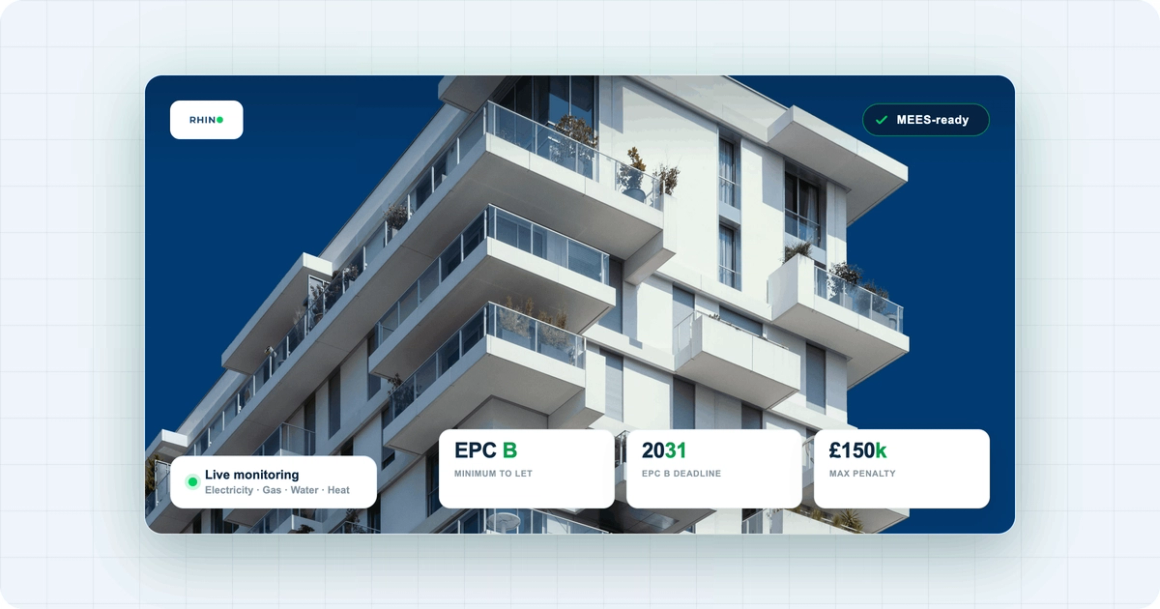
If you own or manage let commercial property in England and Wales, one rule now sets the floor under whether you can put a building on the market: the Minimum Energy Efficiency Standard, or MEES. For years the commercial side of MEES sat quietly at EPC E. That changed on 18 June 2026, when the government confirmed the standard is rising to EPC B by 2031 for larger buildings.
Here is what the rule actually says, what the 2031 change means, and what to start doing about it now.
What MEES is
MEES is the statutory minimum energy efficiency standard for privately rented property in England and Wales. It works off the building's Energy Performance Certificate. EPC ratings run from A, the most efficient, down to G. MEES sets the lowest rating you are allowed to let at, and it uses that rating as both the trigger and the compliance benchmark.
Two things are worth fixing in your head first. MEES covers England and Wales; Scotland and Northern Ireland run their own energy efficiency regimes, so a UK-wide portfolio has to be checked against each one. And the commercial standard sits separately from the domestic one: the rules and timelines for let homes are different from those for let commercial space, even though both go by the name MEES.
The floor today: EPC E
Right now the commercial minimum is EPC E. A landlord generally cannot let, or continue to let, a commercial building rated F or G, unless it is improved to at least EPC E or a valid exemption is registered.
The important word is continue. When MEES first landed in 2018 it only bit on new leases and renewals. Since April 2023 it applies to all commercial lettings, including leases that were already running. So a building you have held and let for a decade is in scope today, not just the ones you are newly bringing to market.
Getting this wrong is expensive. For non-domestic property, penalties scale with the building's rateable value and can reach up to 150,000 pounds per property, and the breach is published on a public register.
The 2031 change: EPC B for buildings over 1,000 m²
The commercial MEES trajectory had been stuck in consultation since 2019 and 2021. The original idea was EPC B by 2030, with an interim EPC C step in 2027. On 18 June 2026 the government finally published an interim response, and it answered the two questions the market cared about: the standard, and the date.
Here is where it landed:
- From 2031, all privately let non-domestic buildings over 1,000 m² must reach EPC B, where doing so is cost-effective.
- Buildings under 1,000 m² stay at the current EPC E standard, with no set deadline to go beyond it.
- The interim EPC C milestone previously floated for 2027 has been dropped and will not be taken forward.
- The existing seven-year payback test and the current exemptions remain in place, so only practical, cost-effective improvements are required.
A few things are still open. The response was described as interim. The government has yet to confirm final penalty levels and enforcement powers, whether shell-and-core lettings get a short exemption window, and whether tenants will carry duties of their own. And the EPC B requirement only takes legal effect once secondary legislation passes through Parliament. The direction is set. The fine print is not.
What this means for your portfolio
Five years sounds like plenty. It is not, once you look at what an E-to-B jump actually involves. Moving a commercial building two or three EPC bands is rarely a single measure. It is a sequence: survey the asset, model what would move the rating, price the works, secure the capital, deliver, then re-assess. Across a portfolio that sequence runs many times over, and plant replacement cycles and lease events will not always line up neatly with a 2031 deadline.
Prioritising is the real first task. Before you can plan a single upgrade, you need to know which buildings are actually the problem, and by how much. An EPC is an asset rating produced by an accredited assessor, not a meter read. But every decision that sits around the certificate, which buildings to prioritise, which measures to fund, and whether the money you spent changed anything, depends on knowing what each building really consumes. Guess, and you risk pouring capital into an asset that was never your worst performer.
Exemptions and the payback test still matter
MEES has never been an absolute hit-the-rating-or-else. The regime includes exemptions, for example where all relevant improvements have been made and the building still falls short, or where a measure would not pay for itself within seven years. Exemptions have to be registered and are time-limited, so they are a tool to manage the timeline, not a way out of it. The June 2026 response kept both the seven-year payback test and the existing exemptions.
How measured data helps you plan
This is the part Rhino is built for. Rhino does not issue EPCs and does not do the retrofit. What it gives you is the accurate, automated consumption data underneath every one of those decisions, across the whole portfolio, without chasing manual meter reads. See the commercial MEES overview for how that maps to the 2031 rule.
In practice that means two things. You can baseline every building on real consumption for all utilities, electricity, gas, water, and heat, including submeters, and rank the portfolio by how it actually performs rather than by whatever rating was last filed. And once a measure is in, you can compare consumption on the same meter before and after, which gives you evidence the work paid off and a stronger case for the next round of capital. The same clean data stream also feeds the CSRD and GRESB reporting you are already doing.
MEES turned a soft we-should-improve-the-estate into a dated obligation with a number attached. The buildings will not sort themselves, and 2031 is closer than it reads. Knowing exactly where you stand, building by building, is the cheapest move you can make first. Talk to our team to see your portfolio's EPC exposure in real numbers.
This article is a plain-language summary for commercial landlords and asset managers. It is not legal advice. MEES obligations, exemptions and deadlines depend on the specific property and on the final secondary legislation, so confirm your position with a qualified adviser and a registered EPC assessor.