
NYC tenant submetering law
NYC Local Law 88: a submeter for every tenant.
Since January 1, 2025, covered New York City buildings need an electrical submeter in every tenant space over 5,000 sq ft, a monthly electricity statement for each of those tenants, and lighting that meets today's Energy Code. The deadline has passed. The penalties come back every year until the building complies.
What LL88 requires
Meter each tenant. Tell each tenant. Every month.
Local Law 88 has two parts: tenant submetering under Article 311 and lighting upgrades under Article 310. The submetering part is the one that keeps running, because every new large tenant space needs a submeter and every metered tenant gets a statement each month.
Who is covered
A single building over 25,000 gross sq ft, or two or more buildings on one tax lot, or under one condo board, together over 100,000 gross sq ft. Residential buildings are covered too, but dwelling units themselves are exempt. Landmarks still have to submeter.
A submeter per covered space
Any tenant space over 5,000 sq ft leased to one tenant, and any floor over 5,000 sq ft shared by several tenants, needs electrical submetering. Smaller spaces on a shared floor can share a submeter. A space with its own dedicated utility meter is exempt.
A statement every month
Each tenant in a submetered space gets a monthly statement showing the electricity their submeter measured that month and any amount charged for it. On a shared submeter, the statement shows the total for the area and the tenant's share of the floor area.
Lighting, filing and penalties
Two reports, and a penalty that repeats.
Owners prove compliance once, with two reports filed through the city's BEAM portal. Until they do, the Department of Buildings assesses penalties every year.
Lighting to today's code
Lighting across the whole building, tenant spaces of any size included, must meet the NYC Energy Conservation Code for new systems: power density and controls such as occupancy sensors. Lighting installed since July 1, 2010 to the code of its day already complies.
Two reports in BEAM
A lighting report and a submetering report, per building, certified by a registered design professional or a licensed master or special electrician. The submetering report lists every covered space and includes a sample monthly statement. The $115 fee applies to all 2026 filings.
Penalties every year
$1,500 a year for each report not filed, and $500 a year for each covered tenant space without a submeter. They keep coming each year until the building shows compliance.
LL88 is also the key to LL97 relief. An owner over the Local Law 97 emissions limit in 2024 to 2029 can only ask for reduced penalties based on good faith efforts with LL88 lighting and submetering compliance attested. In 2026, buildings that had not yet shown compliance had to file by May 1. New covered tenant spaces created later still need submeters. Sources: NYC Department of Buildings, Local Laws 88 of 2009 and 132 and 134 of 2016, and 1 RCNY 103-18, checked October 2026.
Rhino's role
From installed submeters to monthly statements, automatically.
A submeter only satisfies LL88 if someone reads it and turns the reading into a statement, every month, for every tenant. That is the part Rhino takes off your team.
01
Submeters that read themselves
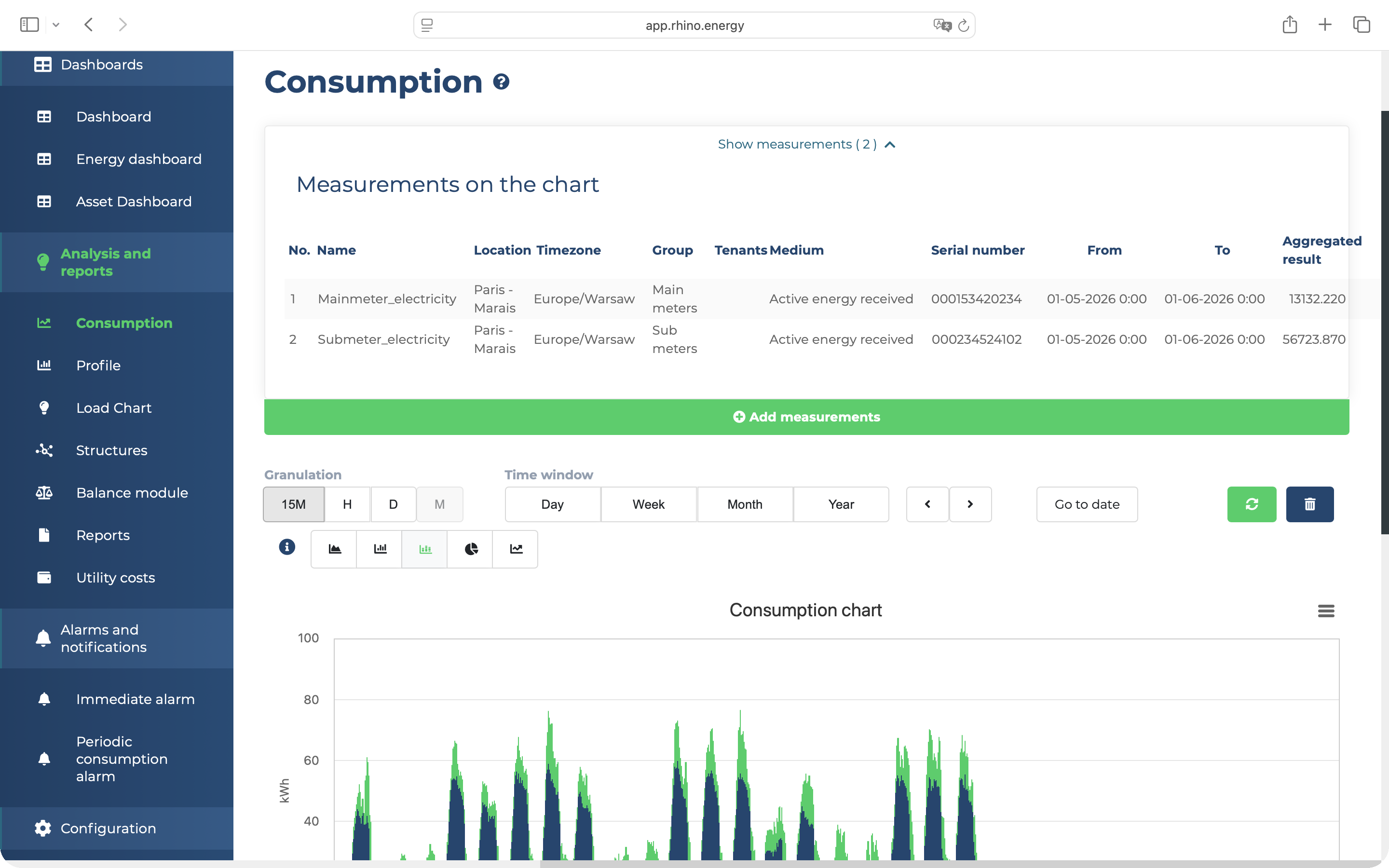
Rhino reads the submeters already in your building, or connects new ones through Rhino hardware, which is FCC certified for the US. Each meter is assigned to its tenant and reports every 15 minutes, so nobody walks the floors with a clipboard.
02
Monthly statements from measured data
Consumption per tenant, per meter, per billing period, delivered to your billing workflow, including Yardi. Each figure ties to a specific meter and tenant, which is exactly what the LL88 statement and the sample in your report need. See Tenant Billing & Engagement.
03
One platform for LL84 and LL97 too
LL88 asks for electricity. LL84 and LL97 count every utility. Rhino reads gas, water and heat in the same platform, so the submeters you install for LL88 also feed your benchmarking and your emissions report.
What Rhino covers
Per tenant
Every submeter assigned to its tenant, with consumption per billing period. The basis for each monthly statement.
15 min
Default data granularity, stored from day one. Disputes settle on timestamped readings, not estimates.
All utilities
Electricity for LL88, plus gas, water and heat for LL84 and LL97, in one platform.
Common questions
Local Law 88, answered.
Local Law 88 of 2009 is part of New York City's Greener, Greater Buildings Plan. It requires covered buildings to upgrade lighting to the current NYC Energy Conservation Code and to install electrical submeters in large tenant spaces, with monthly consumption statements for those tenants. Both requirements applied from January 1, 2025.
In a covered building, any tenant space over 5,000 gross sq ft leased to one tenant, on one or more floors, and any floor over 5,000 gross sq ft divided among two or more tenants. On a shared floor, smaller spaces can each have a submeter, share one, or share a submeter for the whole floor. Dwelling units are excluded, and a space with its own dedicated utility meter is exempt.
The electricity the tenant's submeter measured during the month, and any amount charged for it. Where several tenants share a submeter, the statement shows the consumption for the whole metered area and the percentage of that area the tenant leases. A sample statement is part of the submetering report filed with the city.
A registered design professional, meaning a professional engineer or registered architect licensed in New York, or a licensed master or special electrician. Both the professional and the owner sign the attestation. The reports are filed per building in the BEAM portal after paying the $115 fee in DOB NOW.
$1,500 a year for not filing the lighting report, $1,500 a year for not filing the submetering report, and $500 a year for each covered tenant space without a submeter. The penalties are assessed every year until the building demonstrates compliance.
The compliance date was January 1, 2025, and buildings that had not yet shown compliance had to file by May 1, 2026. The obligation does not end there: penalties repeat each year until compliance, new covered tenant spaces need submeters when they are created, tenants get statements every month, and LL88 compliance is required for good faith relief under Local Law 97.
Turn LL88 submeters into statements tenants trust.
Rhino reads every tenant submeter in your NYC buildings, assigns it to the right tenant, and delivers consumption per billing period to the systems you already use.
Further reading
From the Rhino blog.

